Soundproof Windows: Everything You Need to Know Before Buying
If you live near a busy road, a rail corridor, or under a flight path, you already know what constant noise does to your daily life. A 2021 survey found that most Canadians were bothered by outside noise at home, with nearly 80% of younger people aged 18–34 reporting regular disturbance. Winters make this worse. When you spend months indoors, that noise follows you everywhere.
That’s exactly where soundproof windows come in. They use multiple glass layers, acoustic seals, and specialized frames to block outside noise before it reaches you inside. The difference is immediate and noticeable from day one.
This guide covers everything you need to know about soundproof windows. How they work, what they cost, which type suits your home, and whether the investment actually makes sense for you.
What Are Soundproof Windows?
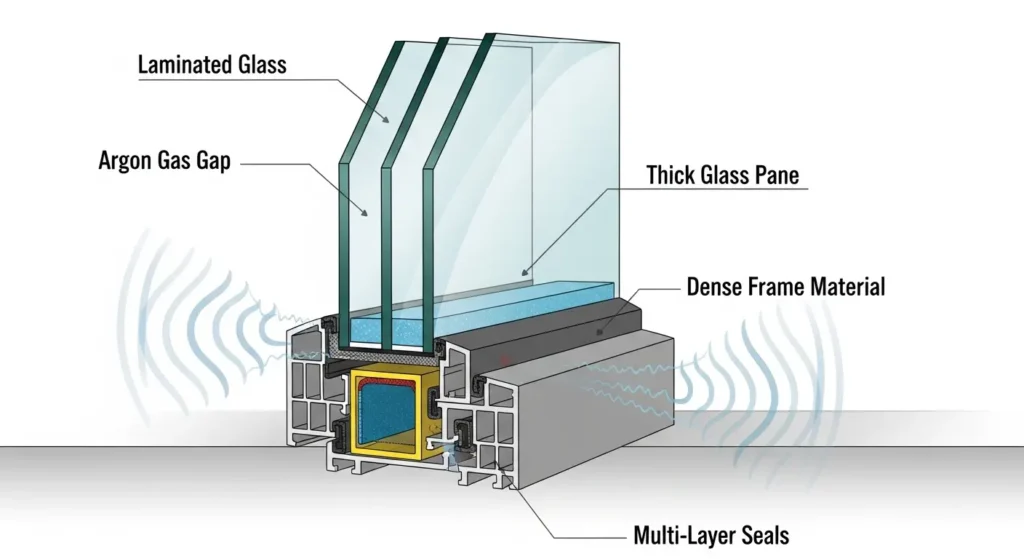
Soundproof windows, also called acoustic windows, are specially designed windows that block outside noise from entering your home. They use laminated glass, multiple panes, and airtight seals to disrupt and absorb sound vibration dampening. Unlike regular windows, they treat noise as a system, not just glass thickness.
A tiny 1/8″ unsealed gap alone can leak as much noise as a fist-sized hole. That’s why acoustic insulation glass combined with proper sealing matters so much. Most soundproof windows carry an STC rating between 48 and 54, far above the standard 26–28 of typical single-pane windows. The higher the sound transmission class, the quieter your home gets.
How Do Noise Reducing Windows Work?
Noise-reducing windows work by using multiple glass layers, airtight seals, and acoustic insulation glass to block sound vibrations before they enter your home.
When sound waves hit your window, they make the glass vibrate. That vibration is what you hear as noise inside. Soundproof windows use multiple glass layers, laminated glass, and gas fills to absorb, reflect, and block those waves.
The laminated glass contains a PVB plastic interlayer. This acts as an acoustic membrane, limiting vibrations and reducing noise by as much as 50%.
Meanwhile, a larger air gap between panes generally leads to better sound vibration dampening. Triple pane windows noise reduction performance is significantly stronger than that of standard double pane windows. Proper sealing matters just as much, even a tiny gap destroys everything.
Read More: Benefits of Triple Pane Windows for Winnipeg Winters
How Much Noise Can Soundproof Windows Actually Reduce?
Soundproof windows can block up to 90–95% of outside noise depending on glass type, pane count, and seal quality.
Here’s where the sound transmission class (STC rating) becomes critical. The higher the score, the quieter your home gets.
A standard window blocks only 15–50% of outside noise. But the best soundproof windows Canada offers, rated STC 45 or above, block up to 95% of traffic noise.
Below is how different window replacement noise reduction options compare:
| Window Type | Panes | STC Rating | What You’ll Hear |
| Single Pane | 1 | 20–25 dB | Everything clearly |
| Triple pane windows for noise reduction | 2 | 28–32 dB | Most outdoor noise |
| Double Pane + Argon | 2 | 32–36 dB | Reduced traffic hum |
| Laminated glass + Double Pane | 2 | 35–40 dB | Muffled street noise |
| Triple pane windows noise reduction | 3 | 40–45 dB | Faint background noise |
| Special acoustic windows | 2 | 45–50+ dB | Near silence indoors |
For most homes, STC 38–42 delivers solid everyday comfort. However, if you live near rail lines, busy roads, or flight paths, you need STC 45 or higher. That’s exactly where installing vinyl window soundproofing through professionals with asymmetrically thick glass becomes the smartest investment.
Types of Soundproof Windows
Not every soundproof window works the same way. Choosing the right type depends on your noise level, budget, and home setup. Here are the main options for noise reduction windows for Manitoba homeowners:
Read More: Different Types of Doors
1. Double Pane Soundproof Windows
Double pane soundproof windows use two glass layers separated by an argon or air gap. They work best for moderate traffic noise on residential streets. Most reach an STC rating of 28–32, handling everyday outdoor noise comfortably.
2. Triple Pane Windows
Triple pane windows noise reduction performance is strong but not always better than double pane. A dual-pane window with thicker or laminated glass often outperforms triple pane for sound. That said, triple pane excels where winters regularly drop below -30°C.
3. Laminated Glass Windows
Laminated glass windows contain a PVB plastic interlayer bonded between two glass sheets. This interlayer dampens sound vibration and reduces noise transmission effectively. They reach STC ratings of 35–40, outperforming standard double pane units.
4. Acoustic Glass Windows
Acoustic insulation glass uses asymmetrical glass thickness to target different sound frequencies. This makes acoustic windows ideal for homes near rail corridors, airports, or busy arterial roads.
5. Vinyl Window Soundproofing
Vinyl window soundproofing frames contain natural insulating properties. Quality vinyl frames contain up to 18 insulating air chambers, actively keeping sound and cold out simultaneously.For quiet windows, Winnipeg homes need year-round, vinyl delivers on both demands.
Soundproof Windows vs Standard Double Pane Windows
Soundproof windows block up to 95% of outside noise. Standard double pane soundproof windows reduce noise by only 0–20%. The difference is significant for any noisy environment.
Below is exactly how both options compare:
| Feature | Standard Double Pane | Soundproof Windows |
| STC Rating | 26–33 | 45–54+ |
| Noise Blocked | 0–20% | 75–95% |
| Glass Type | Basic float glass | Laminated glass with PVB layer |
| Gas Fill | Air or basic argon | Argon or krypton |
| Sound Vibration Control | Minimal | Sound vibration dampening built in |
| Energy Efficiency | Moderate | Energy efficient soundproof windows |
| Best For | Mild street noise | Traffic noise, rail, airport corridors |
| Frame Sealing | Standard | Airtight compression seal |
| Cost | Lower upfront | Higher upfront, greater long term value |
Contact Smarttech Windows for installing energy efficient windows according to the requirements.
Advantages of Installing Soundproof Windows
Not every soundproof window works the same way. Choosing the right type depends on your noise level, budget, and home setup. Here are the main options available:
1. Double Pane Soundproof Windows
Double pane soundproof windows use two glass layers separated by an argon or air gap. They handle moderate street noise on residential roads comfortably. Most reach an STC rating of 28–32. For older homes on quieter streets, they offer a solid and cost effective starting point.
2. Triple Pane Windows
Triple pane windows are particularly strong in extreme cold, keeping homes warm in winter and cool in summer while limiting external noise. That dual benefit matters enormously where heating season stretches nearly six months. Triple pane windows noise reduction performance makes them a practical long term investment for Manitoba homeowners.
Read More: Double Pane vs Triple Pane Windows: A Detailed Comparison
3. Laminated Glass Windows
Laminated glass windows contain a plastic interlayer between two outer glass panes that blocks noise transmitted through the glass. They reach STC ratings of 35–40. For homes sitting near busy arterial roads or rail corridors, this interlayer makes a measurable real world difference indoors.
4. Acoustic Glass Windows
Acoustic insulation glass uses asymmetrical glass thickness to target different sound frequencies simultaneously. Homes near Portage Avenue, the Perimeter Highway, or Kenaston Boulevard face constant truck, bus, and emergency vehicle traffic at all hours. For those locations, acoustic windows with STC 45 or above are the only practical solution.
5. Vinyl Window Soundproofing
Vinyl window soundproofing frames contain natural insulating air chambers that reduce both noise and heat loss. Local installers understand how to install windows that stand up to extreme cold, wind, and heavy traffic simultaneously. For noise reduction windows Manitoba winters demand, vinyl frames deliver on both fronts reliably.
6. Casement Style Acoustic Windows
Casement windows create excellent sealing and are strong candidates for soundproofing due to their compression seal when closed.For sound reducing windows Winnipeg homeowners need near busy corridors. Casement style eliminates the small gaps that sliding windows always leave behind. That gap is exactly where noise sneaks through.
Learn More: How to Winterize Windows and Doors Before Winnipeg’s Deep Freeze
Limitations of Soundproof Windows
Soundproof windows are highly effective, but they come with real limitations every homeowner should know before investing.
- No window eliminates sound entirely. They significantly reduce noise, but some sound always gets through.
- The advanced materials used in acoustic insulation glass come with a noticeably higher price tag than standard windows.
- Even small gaps or improper sealing during window installation destroy their noise blocking performance completely.
- Acoustic windows are significantly heavier than regular windows due to thicker glass and additional components.
- Their tight seals restrict airflow, which can reduce indoor ventilation if non-opening window styles are chosen.
- Additional glass layers in soundproof windows can slightly reduce the amount of natural sunlight entering your room
Read More: How Much Does It Cost to Replace Windows in Winnipeg Homes?
How Much Do Soundproof Windows Cost?
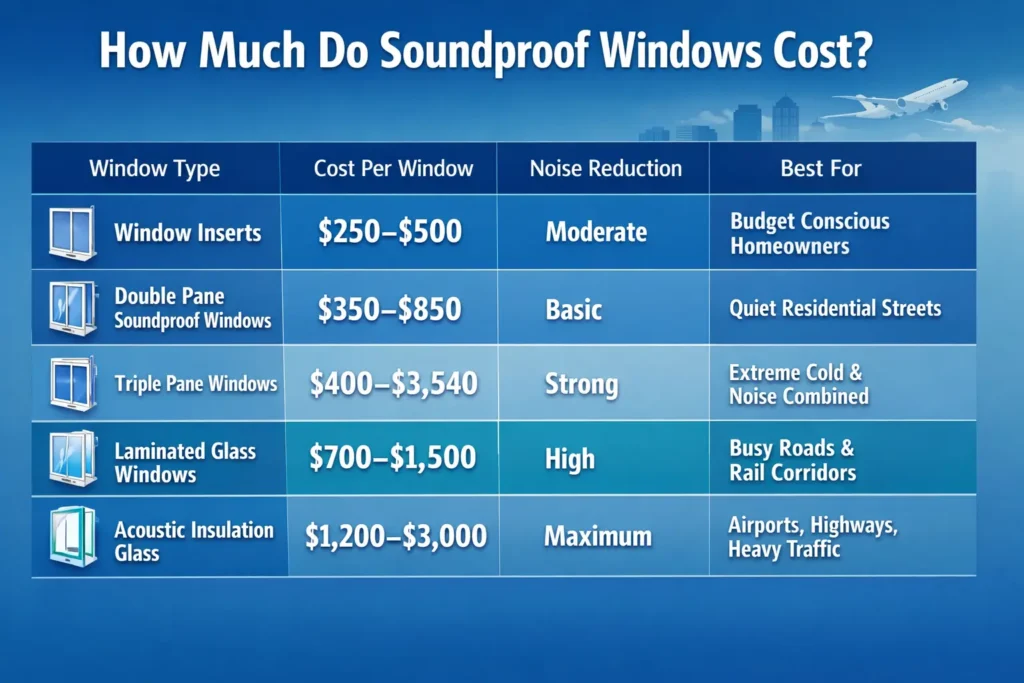
Soundproof windows cost between $550 and $2,000 per window installed. Your final price depends on glass type, window size, and installation complexity.
| Window Type | Cost Per Window | Noise Reduction | Best For |
| Window Inserts | $250–$500 | Moderate | Budget conscious homeowners |
| Double pane soundproof windows | $350–$850 | Basic | Quiet residential streets |
| Triple pane windows | $400–$3,540 | Strong | Extreme cold and noise combined |
| Laminated glass windows | $700–$1,500 | High | Busy roads and rail corridors |
| Acoustic insulation glass | $1,200–$3,000 | Maximum | Airports, highways, heavy traffic |
Are Soundproof Windows Worth the Investment?
Yes. For any home dealing with constant outside noise, soundproof windows deliver real returns on health, comfort, and energy savings.
Think about your own daily routine. Heating season here stretches nearly six months. You spend more time indoors than almost anywhere else in Canada. That constant noise exposure causes increased stress, disrupted sleep, and mental fatigue over time.
You feel that difference every single morning. Homeowners across Winnipeg are increasingly choosing soundproof windows to solve this problem at the source. Beyond comfort, proper window installation done by Winnipeg professionals maximises both noise and thermal performance simultaneously. That return starts from the very first night.
How to Soundproof Existing Windows Without Replacing Them
You don’t always need full window replacement to reduce noise meaningfully. These five practical methods work on existing windows right away.
1. Seal Gaps With Acoustic Caulk
Remove all old caulk first using a putty knife. Clean the frame thoroughly. Then apply acoustic caulk at a 45 degree angle slowly and evenly along every seam where the frame meets the wall.
Smooth it with a damp finger. Unlike regular caulk, acoustic caulk stays permanently flexible, continuing to absorb vibrations as temperatures shift.
2. Install Window Inserts
A window insert is a secondary pane of acrylic or glass installed on the inside of your existing window frame. It creates a dead air space that significantly dampens sound waves. These inserts blend in with your existing window and can reach STC scores of up to 51. Installation takes under an hour per window.
3. Replace Worn Weatherstripping
Cut weatherstripping to the exact dimensions of your window jambs. Press each strip firmly into place ensuring no gaps exist at corners. Add high density weatherstripping to create a tight closure every time the window shuts.
4. Hang Soundproof Curtains
Acoustic curtains have a detachable felt liner that absorbs noise coming through the window. The thicker the folds, the better the sound absorption. They work best against mid to high frequency sounds like voices and traffic hum.
5. Use Honeycomb Cell Shades
Honeycomb shades absorb up to 70% of sound energy while simultaneously adding thermal insulation. Double cell versions outperform single cell significantly.
How to Find the Best Soundproof Windows for Your Home
Finding the best soundproof windows Canada offers comes down to four things. Such as your noise source, STC rating, frame material, and installation quality.
1. Check the STC Rating First
For heavy urban traffic, look for windows with STC ratings between 35 and 40. If you live near highways or airports, aim for STC ratings of 40 to 45. That number tells you exactly how much noise the window blocks before you spend a single dollar.
2. Choose the Right Glass Type
Thicker glass absorbs more sound vibrations. Larger gaps between window panes help disrupt sound waves further. Laminated glass windows with a PVB interlayer consistently outperform standard glass at blocking mid to high frequency noise like traffic and voices.
3. Pick the Right Frame Material
Vinyl window soundproofing frames contain up to 18 insulating air chambers that actively keep sound out while providing strong thermal performance simultaneously. For homes dealing with both extreme cold and heavy noise, vinyl frames handle both demands reliably year round.
4. Never Compromise on Installation
A gap the size of a pen tip can compromise the entire STC rating of even the most expensive acoustic window. Professional soundproof window installation with proper sealing is non-negotiable. The glass does nothing if the frame leaks.
Read more: Benefits of Replacing Old Wooden Doors in Winnipeg
In Closing
Outside noise is not something you should simply get used to. The right soundproof windows transform how your home feels every single day. Better sleep, lower energy bills, and genuine indoor comfort are all within reach.
SmartTech Windows and Doors has helped over 1,000 Manitoba homeowners make that change. Contact us today for a free, no obligation consultation and find out exactly what your home needs.
Frequently Asked Questions
Do soundproof windows help with condensation?
Yes. Their airtight seals and multiple glass layers significantly reduce condensation buildup. In many cases they stop moisture formation on interior glass completely.
How long do soundproof windows last?
Most soundproof windows last 25–30 years with proper care. A well maintained window retains its efficiency and appearance for decades without performance drop.
How do I maintain soundproof windows after installation?
Check seals every season for gaps or damage and clean glass with mild soap and water only. Avoid abrasive chemicals that degrade acoustic seals over time.