Double Pane vs Triple Pane Windows: A Detailed Comparison
When homeowners consider double pane vs triple pane windows, the core difference comes down to glass layers and gas-filled chambers between them. That structural difference directly determines how much heat stays inside your home every single day.
According to Natural Resources Canada, windows account for up to 35% of a home’s total heat loss during the heating season. In climates where temperatures stay below -25°C for months, that number hits heating bills hard every single winter.
Beyond energy performance, the right window also affects noise levels, condensation buildup, and long-term resale value significantly. However, even the best window underperforms without proper professional installation. Read on to find out which window type suits your home, your budget, and your climate best.
What Are Double-Pane Windows?
Double-pane windows are insulated glass units built with two glass layers sealed around a chamber filled with argon gas. That single gas gap reduces heat transfer between your home’s interior and the outdoor temperature significantly.
Because argon is denser than regular air, it insulates far better than an air-filled gap alone. Additionally, most double-pane units come with Low-E glass, which reflects heat back indoors in winter and blocks UV rays in summer.
What Are Triple-Pane Windows?
Triple-pane windows are insulated glass units built with three glass layers and two separate argon gas-filled chambers sealed between them. Because sound and heat must pass through five distinct layers, both transfer significantly less into your home.
Additionally, each chamber surface accepts Low-E glass coatings, giving triple-pane up to two coating opportunities compared to double-pane’s one. The combination of extra glass, dual gas chambers, and multiple Low-E coatings makes triple-pane the highest-performing insulated glass unit available today.
Double Pane vs Triple Pane Windows: A Quick Comparison Table
Here is exactly how double vs triple pane windows stack up across the factors that matter most to homeowners.
| Factor | Double Pane Windows | Triple Pane Windows |
| Glass Layers | Two glass panes with one insulating air or gas space | Three glass panes with two insulating gas spaces |
| Typical U-Factor | ~0.25–0.30 (good insulation) | ~0.15–0.20 (excellent insulation) |
| R-Value | Around R-2 to R-3 | Around R-4 to R-5 |
| Noise Reduction (STC) | ~28–32 STC (moderate sound reduction) | ~32–36 STC (better sound insulation) |
| Weight | Lighter; easier for standard frames | Heavier; requires stronger frames |
| Average Cost Installed | ~$450–$800 per window | ~$650–$1,200 per window |
| Condensation Resistance | Moderate; may form frost in extreme cold | Strong resistance to condensation |
| Energy Savings Potential | Standard efficiency for most climates | Higher efficiency, ideal for cold climates |
| Best For | Mild to moderate climates, budget upgrades | Very cold climates, high-energy efficiency homes |
What Is the Difference Between Double Pane and Triple Pane Windows? A Detailed Comparison
Both window types insulate your home, but they perform very differently when temperatures drop hard. Understanding those differences helps you spend your money on the right window for your specific situation.
Number of Glass Layers
Double-pane windows contain two glass layers with one insulating gap between them. Most older homes built in the 90s still run on these. However, that single gap loses heat fast when temperatures nosedive past -25°C.
Triple-pane windows use three glass layers and two insulating gaps instead. That extra layer blocks heat loss through windows by up to 50% compared to a double-pane window. So your furnace runs less, and your heating bills drop noticeably.
Energy Efficiency (U-Factor / R-Value)
Double-Pane Windows Double-pane windows deliver an R-value between 3 and 3.8. However, their U-factor sits around 0.25 to 0.35, which means moderate heat retention. That works reasonably on mild cold days, but extended weeks below -25°C expose their limits fast.
Triple-Pane Windows Triple-pane windows reach an R-value of 7 to 8, nearly double that of double-pane. Because of this, their window U-factor drops as low as 0.15, meaning far less heat escapes. So during brutal multi-week freezes, your indoor temperature stays noticeably more stable.
Noise Reduction
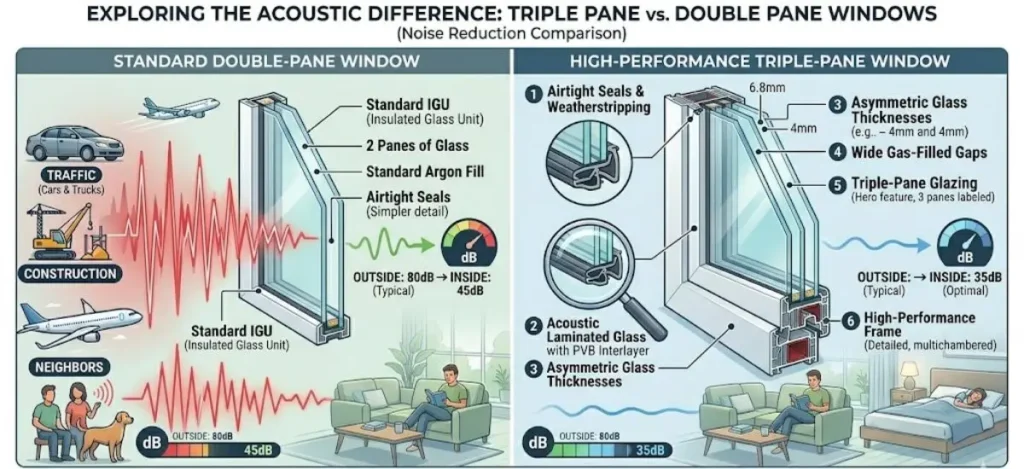
Double-pane windows carry an STC rating between 26 and 32, which blocks everyday street chatter reasonably well. However, that rating drops short for homes sitting near busy intersections. As a result, traffic rumbles and loud neighbors still break through noticeably.
Triple-pane windows reach an STC rating between 35 and 40, making them far superior for double pane vs triple pane noise reduction. That extra glass layer absorbs sound frequencies that double-pane simply cannot handle. So families near high-traffic roads finally experience genuine, day-to-day quietness indoors.
Window Weight
Double-pane windows weigh around 3.5 lbs per square foot, which makes them compatible with most standard older frames. Because of that lighter load, installation stays straightforward with no structural modifications needed. That saves both time and extra renovation costs upfront.
Triple-pane windows push that weight to roughly 5 lbs per square foot, making them 40 to 50% heavier than double-pane. That added weight means older frames sometimes need reinforcement before installation. Therefore, always get a structural assessment done before committing to a full triple-pane upgrade.
Cost Comparison and Affordability
Double-pane windows typically cost between C$300 and C$1,200 per window, making them the more budget-friendly option upfront. That lower price point appeals especially to homeowners replacing many windows at once. Moreover, they still deliver solid everyday energy performance for the investment made.
Triple-pane windows run between C$500 and C$1,800 per window, sitting roughly 10 to 15% higher than double-pane. However, in climates where heating bills spike for six straight months, that gap closes faster than most expect. That’s exactly what makes triple pane windows worth it for long-term homeowners planning to stay put.
Natural Light and Aesthetic Appeal
Double-pane windows carry a Visible Transmittance rating between 0.54 and 0.56, letting in generous amounts of natural light. That matters greatly during winters when daylight hours shrink to barely eight hours.
As a result, rooms feel noticeably brighter and more livable, which is exactly why many homeowners seeking energy-efficient windows Winnipeg still consider double-pane a reliable everyday option.
Triple-pane windows carry a lower VT rating, typically between 0.36 and 0.47, because light passes through three glass layers. However, that subtle difference rarely registers in daily living, according to window performance experts.
Moreover, their thicker modern profiles elevate curb appeal significantly, making them a top aesthetic choice among replacement windows Winnipeg, Manitoba homeowners invest in each year.
Weather Protection
Double-pane windows handle moderate cold and seasonal wind reasonably well for most of the year. However, when outdoor temperatures stay below -25°C for weeks straight, that single insulating gap starts losing the battle. Consequently, cold drafts from windows begin creeping into rooms along exterior walls, making daily comfort a real challenge for anyone living in extreme cold weather.
Triple-pane windows use two sealed gas-filled chambers that block extreme cold far more effectively than one. Their reinforced construction also resists ice buildup on interior surfaces during prolonged deep freezes. \
So for homeowners searching for the best windows for Manitoba climate, triple-pane consistently outperforms through five-plus months of unrelenting heating season.
ROI Potential
According to the Appraisal Institute of Canada, homeowners who invest in professional window replacement in Winnipeg recover 70 to 80% of their costs at resale. That makes double-pane a solid choice for homeowners planning to sell within a few years. Furthermore, recent window upgrades consistently rank among the top renovations that speed up home sales across Manitoba.
Homeowners who install triple pane windows in Winnipeg qualify for Efficiency Manitoba rebates up to $2,000, which cuts the total upfront cost immediately. Additionally, according to Canadian energy efficiency data, triple-pane windows deliver up to 70% ROI while reducing heating bills by 8 to 12% each winter. So long-term homeowners recover their investment faster than most expect.
Read More: How Winnipeg’s Harsh Winters Affect Your Windows
Advantages and Limitations of Installing Double-Pane Windows
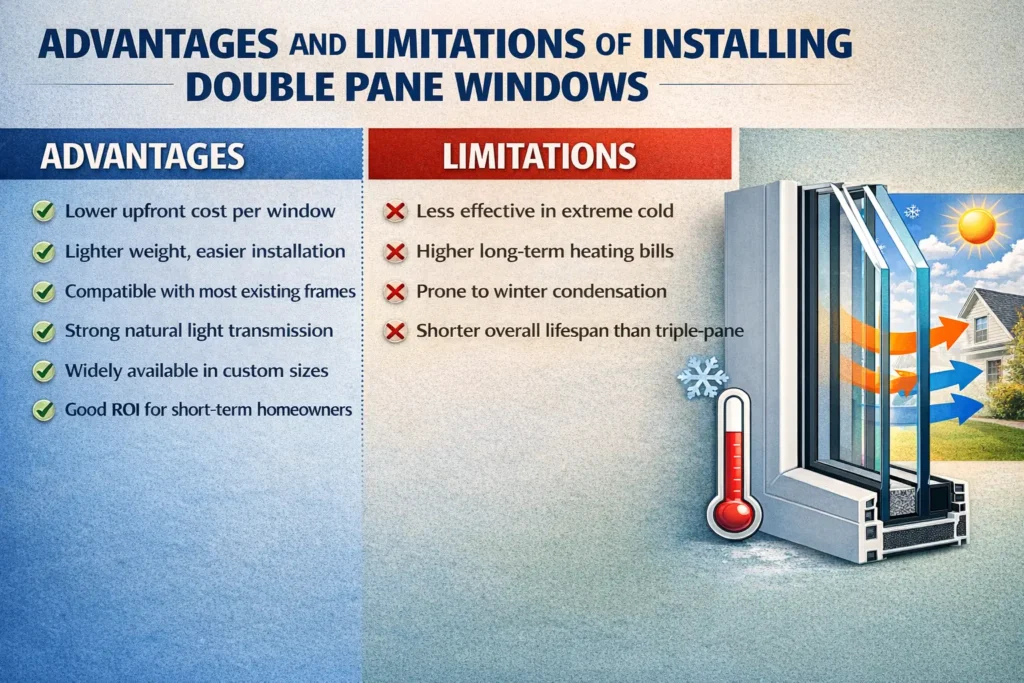
When comparing double-pane windows and triple-pane windows, double-pane holds its ground for the right homeowner in the right situation. Here’s exactly what you get and where they fall short:
Advantages
- Lower upfront cost per window
- Lighter weight, easier installation
- Compatible with most existing frames
- Strong natural light transmission
- Widely available in custom sizes
- Good ROI for short-term homeowners
Limitations
- Struggles below -25°C consistently
- Single gas gap loses heat faster
- Higher long-term heating bills
- More prone to window condensation in winter
- Less effective against street noise
- Shorter overall lifespan than triple-pane
Advantages and Limitations of Installing Triple Pane Windows
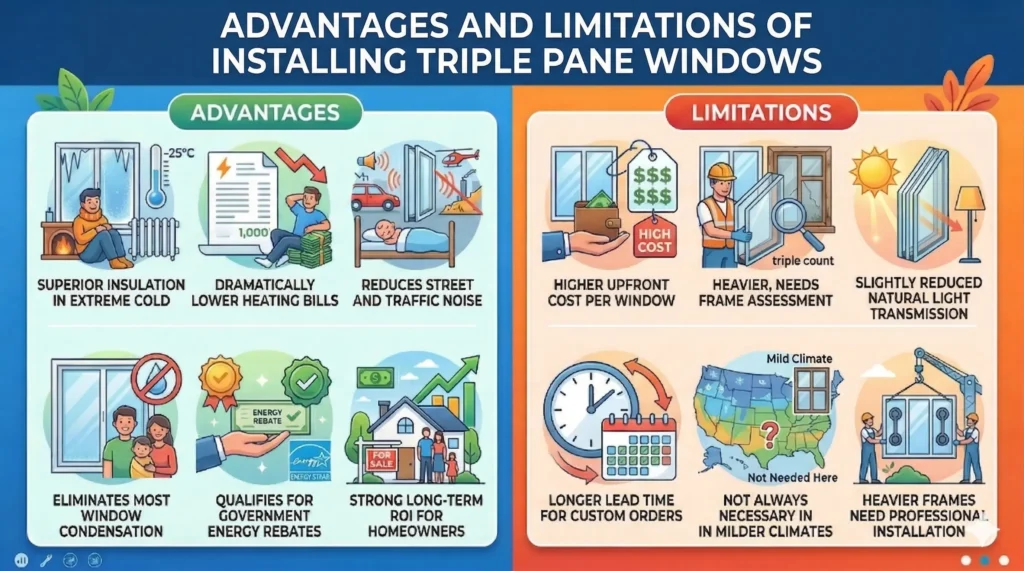
For homeowners deciding between triple-pane and double-pane windows, triple-pane delivers a serious performance upgrade. But it comes with real trade-offs worth knowing upfront. Here’s the full picture:
Advantages
- Superior insulation in extreme cold
- Dramatically lower heating bills
- Reduces street and traffic noise
- Eliminates most window condensation
- Qualifies for government energy rebates
- Strong long-term ROI for homeowners
Limitations
- Higher upfront cost per window
- Heavier, needs frame assessment
- Slightly reduced natural light transmission
- Longer lead time for custom orders
- Not always necessary in milder climates
- Heavier frames need professional installation
Double vs Triple Pane Windows: Which Is Worth the Investment?
For homeowners in climates where temperatures regularly drop below -25°C for months, triple pane windows worth it becomes an easy answer. Triple-pane outperforms double-pane on insulation, comfort, and long-term savings consistently.
In regions with six-plus months of heating season, double-pane windows lose efficiency fast. According to Canadian Choice Windows & Doors, triple-pane windows pay for themselves within 5 to 10 years through reduced heating bills alone. Adding government rebates cuts the payback period down by thousands of dollars more.
Moreover, every independent Canadian performance review of the best windows for Winnipeg winters ranks triple-pane above double-pane consistently. Additionally, according to Ecoline Windows, homeowners switching to triple-pane report 8 to 12% lower energy bills annually.
That adds up to thousands of dollars saved over the full lifespan of the window. So if you plan to stay in your home long-term, triple-pane returns more value than double-pane by a measurable difference.
To Conclude
Choosing between double-pane and triple-pane windows comes down to your budget, climate, and how long you plan to stay in your home. One thing most homeowners overlook is frame compatibility before upgrading.
Beyond that, professional installation determines how well any window actually performs long-term. SmartTech Windows & Doors helps you choose and install the right window confidently. Get your free quote today.
Frequently Asked Questions
Can I upgrade from double-pane to triple-pane without replacing the entire frame?
Sometimes yes, but your existing frames must be wide and strong enough to handle the extra weight. A professional assessment before upgrading saves you from costly structural surprises later.
Do triple-pane windows reduce condensation better than double-pane?
Yes, because triple-pane keeps the interior glass surface warmer, which directly prevents window condensation in winter from forming. Double-pane inner glass stays cooler, making moisture buildup far more common on cold nights.
Which window type handles seal failure better over time?
Double-pane windows carry a lower seal failure risk because they have fewer seams overall. However, certified professional installation significantly reduces that risk for triple-pane windows specifically.