What Style of Window Is Most Energy Efficient?
For Winnipeg homes, casement, awning, and fixed picture windows are the most energy-efficient styles you can install.
When the temperature drops to -30°C and the wind howls, a window’s energy efficiency comes down to one thing: how tightly it seals. Fixed picture windows are the ultimate draft-blockers because they don’t open at all. But if you want fresh air, casement and awning windows are your best defence against the Manitoba cold.
Here is exactly why these styles outperform the rest, and what else you need to keep your Hydro bills in check.
Why Window Style Matters: The Compression Seal
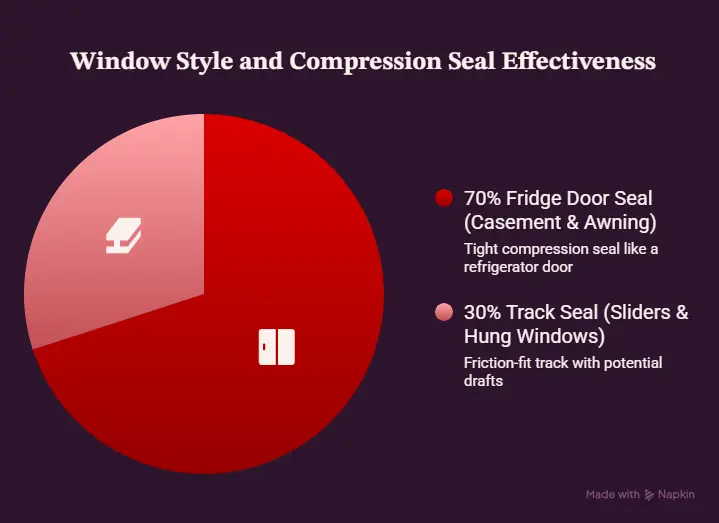
Every window has to let the view in while keeping the freezing cold out. How a window physically closes makes a massive difference in how well it does that job.
- The Fridge Door Seal (Casement & Awning): These windows use a crank mechanism that pulls the glass tightly against a heavy weatherstripping gasket. It creates a solid compression seal, much like a refrigerator door. That is the same mechanism behind every one of the casement windows we install across Winnipeg. In fact, when the prairie winds blow against an awning window, the wind actually pushes the glass even tighter against the frame.
- The Track Seal (Sliders & Hung Windows): Sliding windows are convenient and budget-friendly, but they sit inside a track. Because they need room to glide back and forth, they can never compress as tightly as a crank window. Over time, that friction-fit track can let tiny drafts sneak through.
Beyond the Style: What Actually Stops the Cold
Picking a tight-sealing window style is only half the battle. A beautifully designed awning window will still freeze your living room if it is built with cheap materials.
To handle our extreme climate, your window also needs:
- High-Performance Glass: Standard glass won’t cut it. You need double or triple pane glass packed with argon gas to create a thermal barrier. A Low-E coating matters just as much, and our guide on what a Low-E coating actually does explains how it reflects furnace heat back into the house instead of letting it escape through the glass.
- Warm Frames: Metal conducts cold. If you install an aluminum frame, it will act like an ice cube in your wall. Vinyl and fiberglass frames are the standard for Winnipeg because they actively block the cold from transferring inside.
- Airtight Installation: Even the most expensive, energy-efficient window will fail if the gap between the window and your house framing isn’t sealed properly. Proper shimming, specialized spray foam, and flawless caulking are what actually stop the drafts inside your walls. That sealing work is the core of professional window installation.
Finding the Right Fit for Your Home
The most energy-efficient setup for a Winnipeg home is usually a mix of picture windows for the big openings and casement or awning windows for the airflow, built with double or triple glazing and vinyl frames.
The right choice always depends on your home’s layout, your budget, and which rooms actually need ventilation. Our team at SmartTech Windows & Doors handles every step, from measuring to airtight installation. Schedule a site visit and we will help you draft-proof your home for good.