End Vent Slider Windows vs Vinyl Windows: Which Window Is Right for You?
Comparing an end vent slider window to a vinyl window is like comparing an SUV to a gas-powered engine. When you look up End Vent Slider Windows vs Vinyl Windows, you are actually looking at two different categories: one is a style of window, while the other is the material the frame is made from.
Most end vent sliders installed in Winnipeg homes today are already made of vinyl.
The real decision isn’t whether you want an end vent slider or vinyl. The real decision is choosing between a vinyl end vent slider and another vinyl window style — like a casement, awning, or fixed picture window.
Here is how end vent sliders stack up against other popular vinyl options for ventilation, winter performance, maintenance, and overall cost.
What Is an End Vent Slider Window?
An end vent slider features two or three glass panels sitting side by side inside a single frame. In a two-panel setup, one panel stays fixed in place while the other glides horizontally on an interior track to open.
Because the window slides open rather than swinging out, it requires zero exterior clearance. It gives you a wide, panoramic view when closed and an easy way to catch a breeze when open. Homeowners frequently choose them for bedrooms, kitchens, basements, and wide living room openings. You can see sizes and frame profiles on our page for the end vent slider models we build in vinyl.
End Vent Slider Windows vs Vinyl Windows: What Is Vinyl?
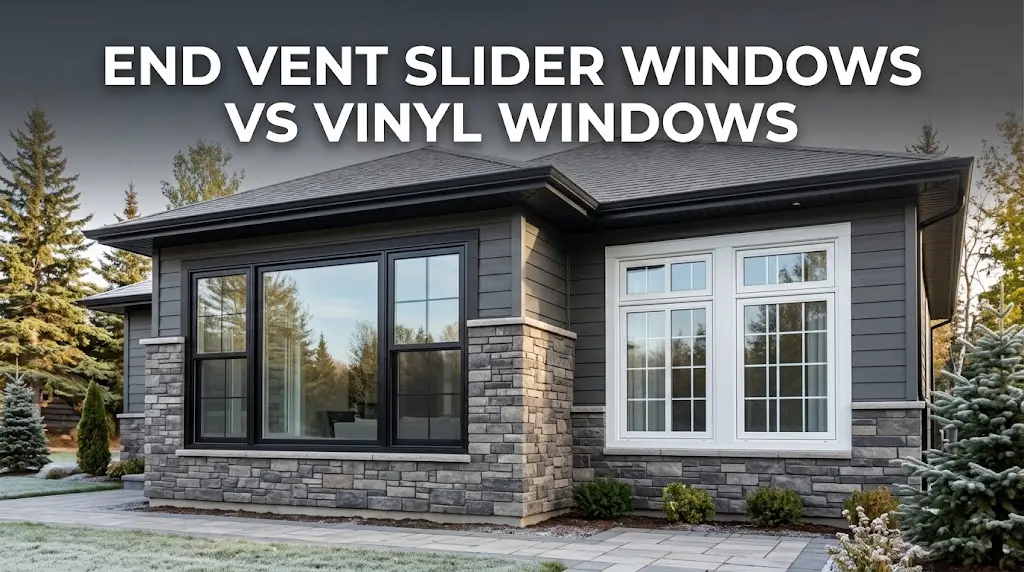
Vinyl is the construction material used to build the window frame, not the shape of the window itself. Made from polyvinyl chloride (PVC), vinyl window frames have become the gold standard for Manitoba homes for three practical reasons:
- Thermal Insulation: Vinyl frames have hollow internal chambers that trap air. Unlike aluminum, they do not conduct freezing outdoor temperatures directly into your wall cavity.
- Moisture Resistance: Vinyl will not rot, swell, or peel after a wet spring or heavy snowfall.
- Low Upkeep: You never have to scrape, sand, or repaint a vinyl frame.
You can get almost any window style built in vinyl, including sliders, casements, awnings, and fixed panes. Before assuming one style costs more than another, it helps to know how casement window pricing compares, since operating mechanics and frame profiles affect your budget equally.
Ventilation and Airflow: Which Style Wins?
This is where operating style matters far more than frame material.
- End Vent Sliders: A standard end vent slider opens to roughly 50% of its total width. This gives you steady, easily adjustable airflow without hardware swinging into your patio, walkway, or deck.
- Casement Windows: Casement windows crank outward like a door. The open glass catches passing prairie breezes and scoops fresh air directly into the room, delivering significantly higher airflow per square foot.
- Single-Hung Windows: Only the bottom sash slides up, restricting your ventilation to less than half the window’s total height. Our breakdown of where vertical sliders still make sense covers that trade-off.
If maximum breeze is your primary goal, a crank-out casement wins. If you want safe, predictable airflow along a high-traffic walkway, an end vent slider is the smarter choice. When evaluating End Vent Slider Windows vs Vinyl Windows for airflow, always focus on the operating style rather than the frame material.
Energy Efficiency in Winnipeg Winters
When the temperature drops to -30°C, your window frame and its seal are your only defence against high Hydro bills.
Vinyl handles Winnipeg’s freeze-thaw cycles easily because it expands and contracts at a manageable rate without cracking. But the operating mechanism dictates how tight the seal stays during high winds:
- Sliders (Weatherstripped Track): End vent sliders sit inside a track with brush or rubber weatherstripping along the perimeter. They insulate well, but track-based windows do not compress shut.
- Crank Windows (Compression Seal): Casement and awning windows pull tight against a continuous rubber gasket when cranked shut. The wind presses the sash tighter against the frame, eliminating drafts.
A high-performance vinyl end vent slider with double or triple-pane Low-E glass and argon fill works well for most standard rooms. If stopping drafts in an exposed, north-facing room is your top priority, our guide to which window style is most energy efficient weighs compression styles against track styles.
Maintenance, Cleaning, and Durability
Both vinyl sliders and vinyl crank windows require far less maintenance than older wood units, but their moving parts demand different care:
- End Vent Sliders: These windows use simple nylon or brass rollers. There are no gears or crank arms to strip. Your main task is running a vacuum nozzle along the bottom track once or twice a year to remove dust, dirt, and debris so the panel glides smoothly.
- Casement and Awning Windows: Hinges and operator gears require occasional silicone lubrication. Cleaning the outside of the glass can often be done from inside the house by cranking the window open. If you have wondered about inward-swinging options, our guide on how casement sashes open explains those mechanisms.
Cost and Budget Planning

Budgeting for End Vent Slider Windows vs Vinyl Windows
Because end vent sliders have fewer mechanical components and simpler hardware than crank-operated windows, they are typically one of the most budget-friendly vinyl options available.
Deciding between other layout configurations?
- Compare horizontal sliding against outward-tilting hardware in our guide on awning windows and end vent sliders.
- Evaluate wider openings with multiple moving panels in our breakdown of awning and double slider designs.
Picture Windows: For Rooms That Need Light, Not Air
Not every opening in your home needs to open. Large living areas, stairwells, and front facades often perform best with a non-operable picture window paired with an end vent slider nearby.
Fixed picture windows have zero moving parts, making them the most airtight and cost-effective way to bring in natural light. Our review of how awning and picture windows differ on daylight walks through glass area and sightlines.
Permits and Professional Installation in Winnipeg
Swapping an old window for a new vinyl end vent slider within the exact same wall opening does not require a municipal building permit in Winnipeg.
If your project involves widening the opening, lowering a sill, or altering a load-bearing exterior wall, you must pull a permit. Confirm the requirement with the City of Winnipeg before work begins to avoid resale or insurance issues.
Proper installation means the new frame is shimmed square, insulated with low-expansion foam, and sealed against water intrusion. See how our installation process works from measurement through final seal.
Making the Final Call
If you want a wide view, simple slide-to-open operation, and reliable performance at an economical price point, a vinyl end vent slider is an ideal fit for bedrooms, kitchens, and basements. If you need maximum ventilation or want the tightest possible compression seal against winter drafts, a vinyl casement or awning window is the better tool for the job.
Most Winnipeg homes use a balanced combination of both.
For an on-site assessment of your current openings and a clear recommendation for your floor plan, book a measurement with our team or visit SmartTech Windows & Doors at 646 Erin Street.
Frequently Asked Questions
Are all end vent slider windows made of vinyl?
The vast majority sold today are made of vinyl. While aluminum and fiberglass options exist, vinyl provides the ideal balance of thermal resistance, moisture protection, and value for cold climates.
Do end vent slider windows meet bedroom egress requirements?
Yes, provided the window frame is ordered to the appropriate dimensions. Because only one side of the window opens, the total opening must be wide enough that the clear opening meets National Building Code egress minimums for emergency exits.
Can I mix end vent sliders with other window styles in the same room?
Yes. A common design layout pairs a large fixed picture window in the centre with an end vent slider on an adjacent wall to handle ventilation while keeping costs down.