Awning Windows vs End Vent Slider Windows: Which Window Is Right for You?
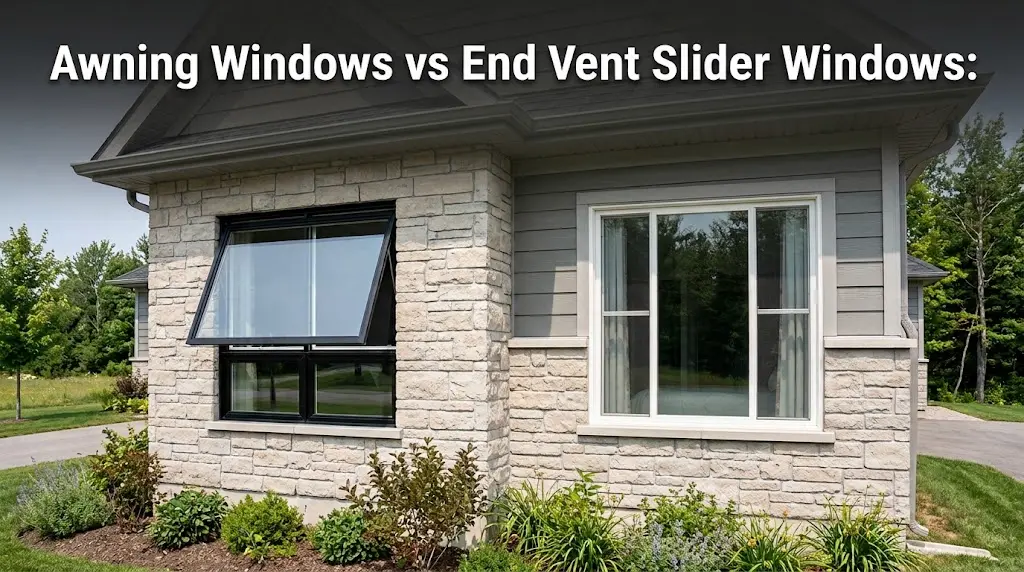
Let’s be honest, Winnipeg winters are downright brutal. When that prairie wind howls, your windows are your only defense. Pick the wrong ones, and you get nasty drafts. Worse, your Hydro bill goes through the roof. But you also need great airflow for our short, hot summers.
That’s exactly where the Awning Windows vs End Vent Slider Windows debate comes in. Both have their perks.
But which one actually handles our crazy Manitoba weather best?
Let’s figure out what makes sense for your home.
What Is an Awning Window?
An awning window hinges at the top and pushes outward from the bottom using a simple hand crank. When open, the glass tilts out to create a small roof or “awning.”
Here is exactly what makes them unique:
- Draft-Proof Seal: When closed, the window pulls tightly against the frame. This creates a powerful seal against air leaks, making them a top choice for chilly Winnipeg basements.
- Maximum Airflow: The entire window opens outward. This lets in far more fresh air per square foot than a slider window, which always stays half-closed.
- Smart Placement: You will typically see them installed high up on walls, above kitchen sinks, or stacked right under large picture windows to add ventilation without ruining your view.
- The Casement Comparison: They work almost like casement windows. The only difference is that casements hinge on the side instead of the top. If you’re weighing the two, it helps to know which way casement sashes actually swing.
We install a lot of these across the city. Have a look at the awning window sizes and frame options we carry if you want to see what’s available.
What Is an End Vent Slider Window?
An end vent slider window features glass panels placed side-by-side, but only one end section actually slides open while the other stays firmly in place.
Here is exactly what makes them unique:
- Low Maintenance: The window glides left to right on a track instead of swinging outward. That means no crank handles to repair and no open glass catching strong wind gusts.
- Maximum Glass: They are a go-to choice for wide openings like living rooms, dining rooms, and home additions. You get a huge, clear view without the heavy cost of a custom picture window.
- Simple Track System: Because only one side moves, the track mechanism is much simpler and easier to care for than a full double slider window.
- Design Options: Only one panel moves on this style. If you want both sides to open, that’s a double slider — and we’ve covered whether two moving panels are worth the extra cost.
You can see the frame profiles and sizing on our page for the end vent slider models we stock.
Key Differences: Ventilation, Sealing, and Winnipeg Winters
The biggest difference between these two windows comes down to one critical detail: how they seal. When Winnipeg temperatures plunge to -30°C, that seal is everything.
Here is how they stack up against our extreme weather:
| Feature | Awning Windows | End Vent Slider Windows |
| How It Closes | Hand crank pulls it shut | Glides left or right on a track |
| The Seal | “Fridge door” compression seal (tight against a rubber gasket) | Relies on weatherstripping along the sliding edges |
| Winter Performance | Incredibly airtight; completely blocks out freezing drafts | Solid, but doesn’t lock quite as tight against extreme winds |
| Maintenance | Low maintenance; keep the hinges clean | Tracks need regular cleaning (dirt buildup weakens the seal) |
Because of that difference in airtightness, crank windows usually cost more than sliders of the same size.
Energy Efficiency in the Manitoba Climate
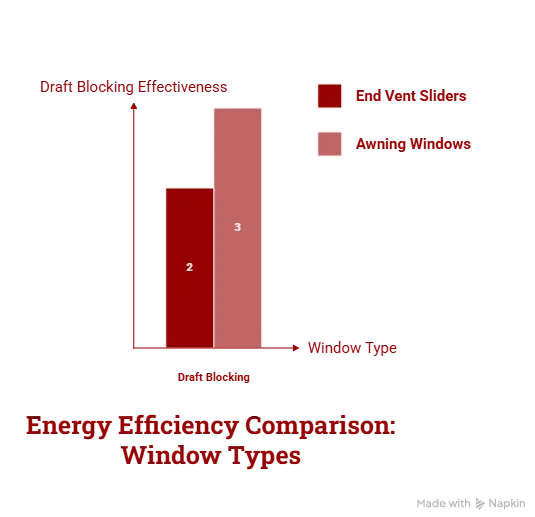
Both windows will keep your house warm if you choose high-quality glass (like Low-E coatings and argon gas). But when the winter wind picks up, the mechanics of how they open makes a huge difference.
- Awning Windows (The Draft Blocker): Because they pull tight into a compression seal, they naturally block drafts better. That is exactly why you see them installed in basements and on north-facing walls that take the brunt of the freezing wind.
- End Vent Sliders (The Weatherstrip Seal): They offer great insulation with the right glass, but they rely on standard weatherstripping. If dirt builds up in the sliding tracks over the years, cold air will eventually sneak in.
If your Hydro bill is the main worry, start with which window styles are the most energy efficient before you settle on a shape.
Maintenance and Hardware
Both window styles are incredibly low-maintenance, but they require different types of basic upkeep to stay in top shape.
- Awning Windows: The hand crank relies on moving metal parts. You will occasionally need to apply a little lubricant to the gears and hinges so they don’t get stiff over the years.
- End Vent Sliders: These have no cranks or gears to break. Your only real job is keeping the bottom track clean. If dust and dead bugs build up in the track, the window will stick and the weather seal will weaken.
Wondering how other styles hold up over the years? We’ve also looked at whether single hung windows are worth it in a Winnipeg home.
Which Rooms Suit Each Window Style
Awning windows are the go-to for basements, bathrooms, and laundry rooms. Anywhere you want fresh air without rain blowing in, since the sash acts as its own little roof.
They also work well stacked above or below a big fixed pane. That adds airflow without cutting up the view. We break that setup down in our post on the awning and picture window pairing.
End vent sliders shine in bigger rooms — living rooms, bedrooms, additions — where you want a wide stretch of glass and only need one section to open. They’re also a popular retrofit in older character homes, including a lot of the window replacement work we do in Fort Garry.
Cost Considerations
Awning windows cost a bit more than an end vent slider of the same size. You’re paying for the crank hardware and the compression seal. The gap is usually small once you factor in years of fewer drafts.
End vent sliders are one of the cheaper operable styles per square foot of glass. That matters most on wide openings, where a swing-out sash would be awkward anyway.
Planning a bigger exterior update? It’s worth seeing how fiberglass and steel entry doors compare so your doors and windows line up on budget and performance. SmartTech Windows & Doors handles the measure, the order, and the install on both.
Our Recommendation
Is the room below grade, facing the wind, or in need of airflow during rain? Think basement, bathroom, or laundry room. Go with awning windows.
Working with a wide opening in a living or dining room? Want the most glass with the least fuss? An end vent slider is the practical pick, and usually the cheaper one.
Plenty of Winnipeg homes end up with both. Awning windows in the utility spaces, end vent sliders in the main rooms.
If new deck doors are part of the same job, our comparison of patio doors versus garden doors is a useful next read. Either way, get a second set of eyes on your actual openings. Book a free in-home measure and we’ll tell you straight what fits.
FAQ
Do awning windows leak less than sliders in heavy rain?
Yes, generally. Because the sash tilts outward and compresses shut, awning windows shed rain away from the opening even when cracked open slightly, whereas a slider’s flat track design makes it less forgiving if left open during a storm.
Can I replace an end vent slider with an awning window in the same opening?
Often, yes, though it depends on the rough opening dimensions and how the window is framed. A proper measurement and assessment from an installer is the only way to confirm fit and cost for your specific wall.
Which style is better for a basement egress window in Winnipeg?
Awning windows are commonly used in basements for regular ventilation, but egress-code basement windows usually need a specific minimum opening size, so a slider or casement may be required depending on your local code requirements — always confirm with your installer before choosing a style.