Picture Window vs Bay Window: Which Adds More Value?

A picture window typically delivers stronger value for the investment due to its lower installation cost, excellent energy efficiency, and minimal maintenance requirements. A bay window, however, can increase perceived home value by adding visual interest, additional interior space, and enhanced curb appeal.
The right choice depends on what you value most as a homeowner. In Manitoba’s climate, window performance plays a major role in long-term comfort and energy costs. Picture windows excel at maximizing natural light while helping maintain indoor temperatures efficiently. Bay windows offer a more distinctive architectural feature that can transform both the appearance and functionality of a room.
Read on to find your best fit.
Picture Window vs Bay Window: Side-by-Side Comparison
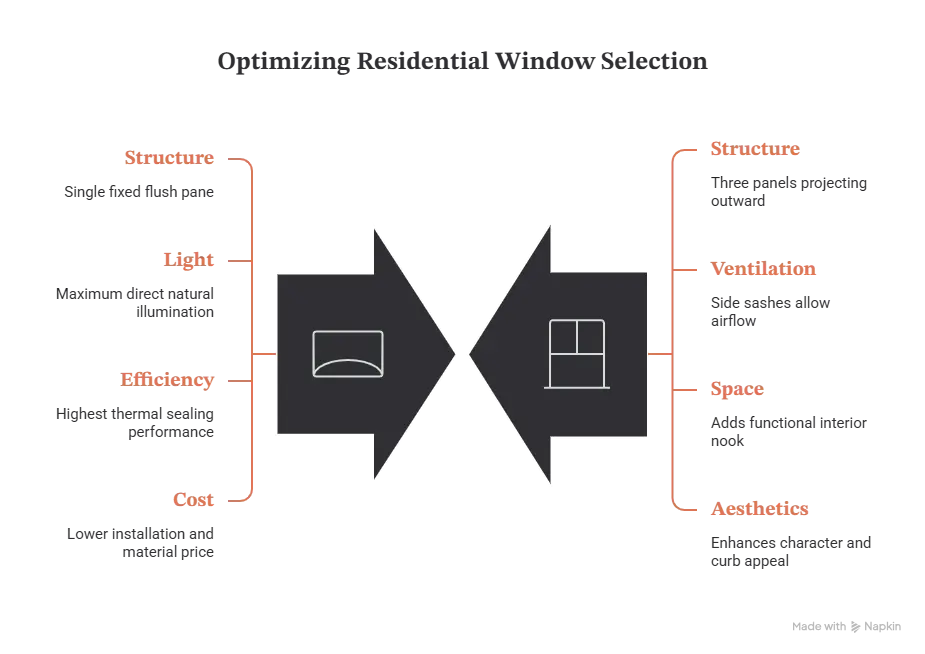
Here is the quick snapshot before we break down each factor in detail.
| Factor | Picture Window | Bay Window |
| Structure | One fixed pane, flush to wall | Three panels, projects outward |
| Opens for air? | No | Yes, side sashes open |
| Natural light | Maximum, direct | Softer, from three angles |
| Adds floor space? | No | Yes, a nook or seat |
| Energy efficiency | Highest, fully sealed | Strong, but more seams |
| Cost installed | Lower | Higher |
| Install | Simple retrofit | Needs structural support |
| Best for | Modern look, big views, tight budgets | Space, character, curb appeal |
What Is a Picture Window?
A picture window is a large, fixed pane of glass. It sits flush with your wall, does not open, and frames your view like a living photograph.
That sealed build is the whole point. No moving parts means no sash gaps for cold air, so it earns the lowest U-factor of any style. With Low-E glass and argon gas, it also trims your Manitoba Hydro bill all winter.
You can size a picture window big, since it carries no operating hardware. For that reason, homeowners often combine it with casement or awning units for a striking living-room wall. Vinyl and fibreglass picture windows suit modern builds, lofts, and stairwell openings alike.
What Is a Bay Window?
A bay window joins three or more windows that push outward from your wall. The centre pane stays fixed, the side sashes open, and an alcove forms inside the room.
Here is how it works for you. The projection adds real floor space, enough for a window seat, a reading nook, or a breakfast bench. Much like casement windows, the flanking sashes crank open on hinges for steady ventilation and a fresh cross-breeze.
The side panels sit at 30, 45, or 90 degree angles, which sets the depth of your nook. A small roof and an insulated seat board cap the unit. For a softer, curved take on the same idea, bow windows use four to six panels instead.
Picture Window vs Bay Window: Which Has Better Curb Appeal?
Both windows lift your home’s look, but they work in opposite ways. One keeps the façade clean and modern; the other adds bold shape, depth, and lasting character to the street view.
How Picture Windows Enhance Modern Homes
Picture windows are known for their clean lines and expansive glass surfaces. Their simple design complements modern, contemporary, and newer Winnipeg homes by creating an open, streamlined appearance. When paired with popular frame finishes such as black or dark-coloured trim, they can add a sophisticated and updated look to the exterior.
Because picture windows sit flush with the wall, they maintain a smooth façade and reinforce a minimalist architectural style. Their large glass area also maximizes natural light, making interior spaces feel brighter and more inviting
How Bay Windows Create Architectural Interest
Bay windows change your home’s whole profile. They jut out, cast shadows, and add a three-dimensional layer that flat glass cannot match. That projection reads as custom and premium to passersby and appraisers alike.
They suit Victorian, Colonial, Craftsman, and many character homes across our older neighbourhoods like Wolseley and Crescentwood. A small roofline and trim finish the look, so classic homes here still turn heads.
Which Style Attracts More Buyers?
Bay windows make a bigger curb-appeal splash and signal real investment in the home. Still, their payoff depends on your street, your home’s style, and buyer taste. Established, character-rich areas reward that traditional look most at resale.
Picture windows, by comparison, carry broader and safer appeal across nearly every property type. Modern buyers prize their clean view, big daylight, and strong energy ratings. So for the widest reach, the neutral choice usually wins.
Read More: How Much Does Storm Door Installation Cost Winnipeg?
Picture Window vs Bay Window: A Detailed Comparison
Let us weigh the eight factors that decide it for most homeowners. Each one shapes your daily comfort, your energy bills, and your long-term resale value, so compare them against your own priorities.
Design and Appearance
A picture window looks flat, sleek, and calm, so the glass settles into the wall and lets your view lead. Its frameless feel suits open-concept living rooms and minimalist interiors.
A bay window, by contrast, performs like a showpiece, since its angled projection adds dimension and a strong focal point. It anchors a dining nook or a Victorian-style façade beautifully.
Natural Light
A picture window draws maximum direct light through one wide pane, so the room feels open and bright all day. In effect, the large glazing acts like a sunlit canvas on south-facing walls.
A bay window, on the other hand, pulls daylight from three directions at once. That multi-angle glow softens harsh winter shadows and brightens corners a single flat pane misses.
Ventilation
A picture window stays fixed in its frame, so it offers no airflow on its own. Many homeowners flank it with an operable sash to fix that. A bay window solves the problem by design, because its angled casement or double-hung sashes crank open. Fresh air then flows through a kitchen, bedroom, or living room whenever the breeze calls.
Energy Efficiency
This factor matters most in our climate. Windows cause up to 25 percent of a home’s heat loss, according to Natural Resources Canada.
A picture window seals tight and blocks air leaks, so it posts the lowest U-factor and the highest R-value of any style. A bay window performs well too, yet its extra seams and wall projection demand a careful seal.
For either, pick ENERGY STAR certified triple-pane glass with Low-E coatings and argon fill; the energy-efficient windows range makes ratings easy to compare. Efficiency Manitoba even offers a $100 rebate on each qualifying triple-pane unit.
Read More: Fiberglass Door Cost In Winnipeg: Full Price Guide
Installation Complexity
A picture window usually drops into your existing rough opening, so the retrofit stays quick, clean, and low-cost. In fact, a single crew finishes most jobs in a few hours. A bay window asks far more, since it projects past the wall and needs a structural header to carry the load. For that reason, proper window installation covers the framing, sealing, and interior trim.
Maintenance Requirements
A picture window needs little beyond an occasional wipe of the glass, since it has no hardware to service. As a result, its single sealed pane rarely fails.
A bay window, by contrast, takes more attention, because you clean extra panes and angles, check the weatherstripping each year, and keep the weep holes clear so meltwater drains freely through our long spring thaw.
Cost
A picture window ranks among the most affordable large-glass options, since simple hardware and a fast retrofit keep the price down. As a result, it fits tighter renovation budgets well.
A bay window, however, sits at the premium end; local bay and bow units often run from $1,200 to $4,500 installed. For a clearer estimate, a window replacement quote breaks down both styles.
Read More: Vinyl vs Fiberglass Windows: Cost, Lifespan & ROI Guide
Pros and Cons of Picture Windows
Picture windows reward efficiency and value, but they trade away airflow and space.
| Pros | Cons |
| Most energy efficient, fully sealedLowest cost large-glass optionMaximum direct light and wide viewSimple, fast retrofit installAlmost no maintenanceBroad buyer appeal, safe resale | Does not open, no ventilationAdds no interior spaceLarge fixed pane can feel plain |
Pros and Cons of Bay Windows
Bay windows reward space and character, but they ask for more budget and care.
| Pros | Cons |
| Adds real floor space and a nookStrong curb appeal, custom lookSide sashes open for fresh airSoft light from three anglesReads as premium to buyers | Costs more, up to triple a flat windowComplex install needs structural workMore seams, so drafts if installed poorlyMore upkeep and seal checksResale value depends on neighbourhood |
To Conclude
So, picture window vs bay window, which adds more value? Pick a picture window for the smartest dollar return and top winter efficiency. Pick a bay window for added space and standout character.
Either way, insist on a proper seal, since a poor fit costs you all winter. Ready to decide? Call SmartTech Windows and Doors, your local Winnipeg installer, at (204) 318-6162 for a free consultation.
Frequently Asked Questions
Can you replace a picture window with a bay window?
Yes, you can replace a picture window with a bay window. The job needs a structural header and wall framing, so always hire a professional installer, since it is not a simple swap.
How long does a bay window installation take?
A bay window installation usually takes six to eight hours, because it involves framing and finishing. A standard picture window, by contrast, often goes in within just a couple of hours.
Do new windows increase resale value in Canada?
Yes, new windows increase resale value in Canada. Window replacement recoups roughly 70 to 80 percent of its cost, which ranks it among the strongest mid-range home upgrades for return.
Are bay windows prone to condensation in winter?
Bay windows can show more condensation in winter, since they project off the wall and run a few degrees cooler. Proper insulation under the seat board and head prevents most of it.
Which window type is most energy efficient?
The picture window is the most energy efficient type. Its fixed, fully sealed pane has no sash gaps for cold air, so it posts the lowest U-factor of any style.