Screen Door vs Storm Door: What’s the Real Difference?
A screen door is a lightweight, ventilation-focused entry layer that allows airflow and insect protection, while a storm door is a reinforced outer barrier designed to improve insulation, weather resistance, and overall entry security performance.
Choosing between them comes down to how your home responds to seasonal shifts, comfort expectations, and how much protection you need at the main entry point throughout the year. In colder winters and warmer seasonal transitions, these differences directly impact indoor comfort and energy efficiency.
This guide explains both options in a clear, practical way so you can decide with confidence. Read on to understand which door suits your home best.
Screen Door vs Storm Door: A Quick Comparison Table
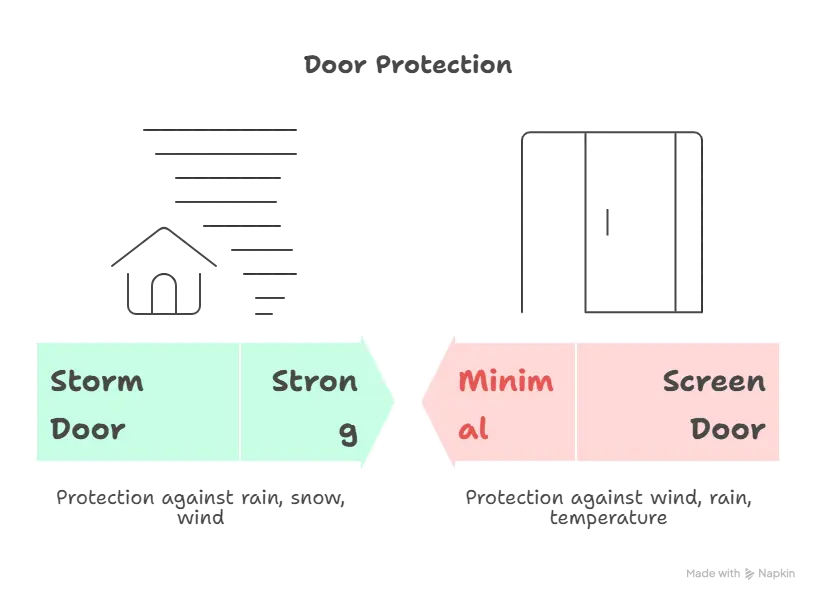
Here’s a clearer breakdown of how both door types perform in real home conditions, especially when you compare airflow, protection, and long-term value in everyday use.
| Factor | Screen Door | Storm Door |
| Core Function | Designed for open airflow and ventilation through a mesh barrier | Designed as a protective outer layer that improves insulation and entry protection |
| Air Movement Control | Fully open airflow with no resistance to outside air | Controlled airflow with sealed frame and optional ventilation panels |
| Weather Protection | Minimal protection against wind, rain, or temperature changes | Strong protection against rain, snow, wind pressure, and seasonal shifts |
| Thermal Performance | No insulation, heat and cold pass through freely | Helps reduce heat loss by creating an additional sealed air buffer |
| Security Level | Lightweight mesh offers basic separation only | Reinforced frame and glass panels provide added entry resistance |
| Durability | Mesh and lightweight frame can wear with exposure and impact | Built for long-term seasonal exposure with stronger structural materials |
| Cost Range (CAD Installed) | ~$150–$600 depending on frame and mesh quality | ~$400–$1,200+ depending on glass type and insulation features |
| Maintenance Needs | Occasional screen replacement or frame tightening | Periodic seal checks, hinge alignment, and cleaning |
| Ideal Use Case | Homes prioritizing ventilation and seasonal openness | Homes needing insulation, protection, and year-round entry performance |
What Is a Screen Door?
A screen door is a lightweight secondary door installed in front of the main entry to support airflow while keeping insects, dust, and outdoor debris outside. It typically features a mesh panel fitted into an aluminum, steel, or wooden frame, designed for ventilation rather than insulation or security.
Screen doors are commonly used during warmer seasons to improve natural air circulation inside the home without fully opening the main door. In everyday use, they help reduce indoor stuffiness while still maintaining a physical boundary at the entrance.
What Is a Storm Door?
A storm door is a reinforced outer door installed in front of the main entry door to improve insulation, weather resistance, and overall entry protection. It usually includes glass or screened interchangeable panels within a durable frame, along with weatherstripping to minimize air leakage.
Storm doors help protect the main door from rain, snow, wind pressure, and temperature fluctuations. They also add an extra layer of energy efficiency and security, making them especially useful in climates with harsh seasonal changes.
Screen Door vs Storm Door: Key Differences Explained
1. Material Types and Build Quality
Screen Door
Screen doors are typically built with lightweight aluminum or composite frames paired with fiberglass or metal mesh. Their priority is airflow and visibility rather than impact resistance, which makes them better for everyday ventilation but less suited for continuous weather exposure. If improving airflow is your main goal, exploring screen door options can help narrow down styles and configurations.
Storm Door
Storm doors use a heavier-duty frame with glass panels, reinforced corners, and tighter sealing components to create an additional protective layer in front of the main entry door. This stronger construction helps reduce direct exposure from wind, moisture, and seasonal wear while improving the long-term durability of the entry system. For homes needing more weather protection, comparing storm door solutions is often a practical next step.
Read More: Steel Door vs Wood Door: Durability, Cost, and Performance Compared
2. Insulation and Weather Protection Comparison
Screen Door
If you like keeping your front or backyard entry open during warmer days, a screen door supports that natural airflow. The mesh design lets air move freely, which also means outdoor temperature, wind, and moisture pass through with very little resistance or insulation effect.
Storm Door
If you’ve ever stood near your main entrance and felt cold air leaking in or noticed temperature drops around the hallway, that’s where a storm door becomes useful. It adds a sealed layer with insulated glass and weatherstripping that slows down air exchange and reduces direct exposure.
When these drafts start affecting comfort indoors, upgrading the full entry system through a door replacement service can further improve overall insulation and long-term stability.
3. Security Comparison: Which Door Offers Better Protection?
Screen Door
If someone is relying on a screen door for security, it’s important to understand its limitations. The mesh screen and lightweight aluminum frame are designed for airflow, not resistance. It can be cut, pushed, or damaged easily, so it provides almost no real protection against forced entry. Its function is purely ventilation and visibility, not security reinforcement.
Storm Door
If your entry area feels exposed or you want an extra physical barrier before the main door, a storm door offers a stronger security layer. The solid frame, tempered glass options, and reinforced hinges make it more resistant to impact and tampering compared to mesh-based designs.
When entry security feels insufficient or outdated, upgrading through a door replacement service can improve overall protection and long-term durability of the entry system.
4. Maintenance and Lifespan Comparison
Screen Door
Screen doors need more frequent upkeep because the mesh is constantly exposed to physical wear from pets, wind, and debris. Over time, screens can loosen, tear, or lose tension, while lightweight frames may bend or corrode depending on exposure. This results in a shorter service life in high-use entry areas.
Storm Door
Storm doors are built for longer durability due to reinforced aluminum frames, tempered glass panels, and protected sealing systems that reduce environmental stress. Maintenance is usually limited to cleaning and checking hinges or weatherstripping.
In cases where alignment or fit affects long-term performance, proper door installation service ensures the system maintains its intended lifespan and structural efficiency.
Read More: Casement vs Sliding Windows: Which Is Better?
5. Ventilation and Airflow Performance
Screen Door
If you want constant fresh air without opening the main door, screen doors are designed exactly for that purpose. The mesh construction allows unrestricted airflow, keeping indoor spaces ventilated while still blocking insects and debris. This makes them highly effective for seasonal use when natural ventilation matters more than insulation or security.
Storm Door
Storm doors allow controlled ventilation but not full airflow like screen doors. Most use adjustable panels or removable screens combined with a sealed frame, so airflow is limited and more regulated. They are designed to balance ventilation with protection, meaning you can get some fresh air while still maintaining a stronger barrier against outdoor conditions.
6. Energy Efficiency and Heat Loss Control
Screen Door
Screen doors support airflow through open mesh construction but offer no resistance to thermal transfer. In real homes, this means indoor heat escapes quickly during colder months, and outdoor drafts move freely through the entry zone, especially when wind pressure increases around exposed front-facing doors.
Storm Door
Storm doors create an additional sealed barrier using insulated or low-E glass, weatherstripping, and tighter frame construction. This reduces air infiltration and slows heat loss before it reaches the main entry door, helping stabilize indoor temperatures during seasonal changes.
For homeowners comparing broader energy performance upgrades across entry systems, exploring energy-efficient windows can also help align door and window efficiency in a complete home insulation setup.
7. Installation Cost and Replacement Considerations
Screen Door
Screen doors are the most budget-friendly option, typically ranging from $150–$600 CAD installed, depending on frame material and mesh quality. They are simple secondary additions, so installation is quick, and replacement usually involves only the mesh or basic frame adjustments rather than full system work.
Storm Door
Storm doors are a higher investment, usually around $400–$1,200+ CAD installed, depending on glass type, insulation level, and frame strength. Because they function as a protective outer layer, proper fitting and sealing are critical for performance and durability. Poor alignment can reduce efficiency, so professional installation quality becomes a key cost factor in long-term value.
Pros and Cons of a Screen Door
| Pros | Cons |
| Enables continuous airflow without fully opening the main doorHelps reduce indoor stuffiness during warmer seasonsActs as a light barrier against insects and outdoor debrisLightweight structure makes the operation smooth and low-effortWorks well as a seasonal ventilation layer in active households | Offers minimal resistance to cold drafts or heat lossA mesh structure can be damaged by pets, wind pressure, or impactProvides very limited entry security compared to solid door systemsFrame and screen tension may loosen over time with frequent useDoes not contribute meaningfully to overall home energy efficiency |
Pros and Cons of a Storm Door
| Pros | Cons |
| Adds a sealed buffer that reduces drafts and air leakageImproves insulation and helps stabilize indoor temperaturesEnhances entry security with reinforced framing and glassProtects the main door from rain, snow, and seasonal wearCan improve overall energy efficiency in seasonal climates | Higher upfront cost compared to screen doorsRequires more precise installation for proper performanceCan add extra maintenance for hinges and seals over timeMay limit full open-air ventilation depending on designA heavier structure can feel less convenient for frequent use |
Read More: How to Fix a Drafty Front Door? Expert Guide
Screen Door vs Storm Door: Get Expert Guidance to Choose
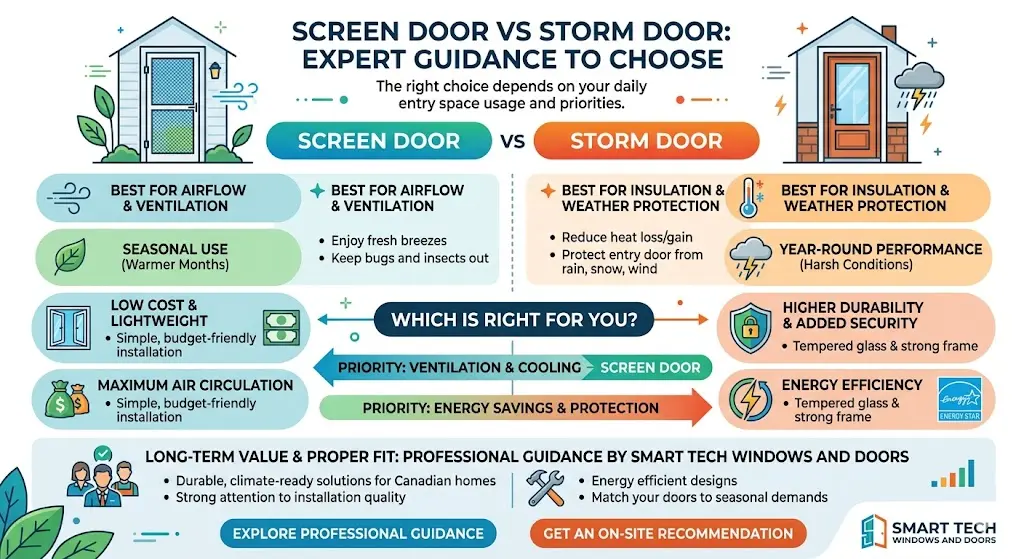
Screen doors are best if your priority is airflow and seasonal ventilation with low cost, while storm doors suit you better if you need insulation, weather protection, and added security for year-round performance in harsh conditions.
Both options serve very different roles, so the right choice depends on how you use your entry space daily.
For homeowners looking for long-term value and proper fit, Smart Tech Windows and Doors focuses on durable, climate-ready solutions designed for Canadian homes. With strong attention to installation quality, energy efficiency, and entry performance, the team helps ensure your doors and windows actually match real seasonal demands.
If you’re still unsure, you can explore professional guidance through their window installation service or door replacement support for a more accurate on-site recommendation.
FAQs
1. Which is better for cold climates: screen door or storm door?
Storm doors perform significantly better in cold climates because they add a sealed barrier that reduces heat loss and blocks cold air infiltration. Screen doors, on the other hand, are designed for airflow and provide no thermal protection, making them unsuitable for winter comfort or energy retention.
2. Do storm doors improve energy efficiency?
Yes, storm doors improve energy efficiency by creating an insulating air pocket between the main door and the exterior environment. This buffer helps reduce drafts, minimizes heat escape, and supports more stable indoor temperatures, especially during seasonal transitions.
3. Can a screen door be used year-round?
Screen doors are not ideal for year-round use because they are built for ventilation, not insulation. During colder months, they allow unrestricted airflow, which leads to heat loss and reduced indoor comfort. They are best used seasonally when fresh air circulation is the main priority.
4. What is the cost difference between screen doors and storm doors?
Screen doors are generally more budget-friendly due to simpler materials and design, making them a low-cost ventilation solution. Storm doors cost more because they include reinforced framing, glass panels, and sealing systems that improve insulation, durability, and long-term performance.