Drafts Coming in Around Newly Installed Windows: What Homeowners Should Know
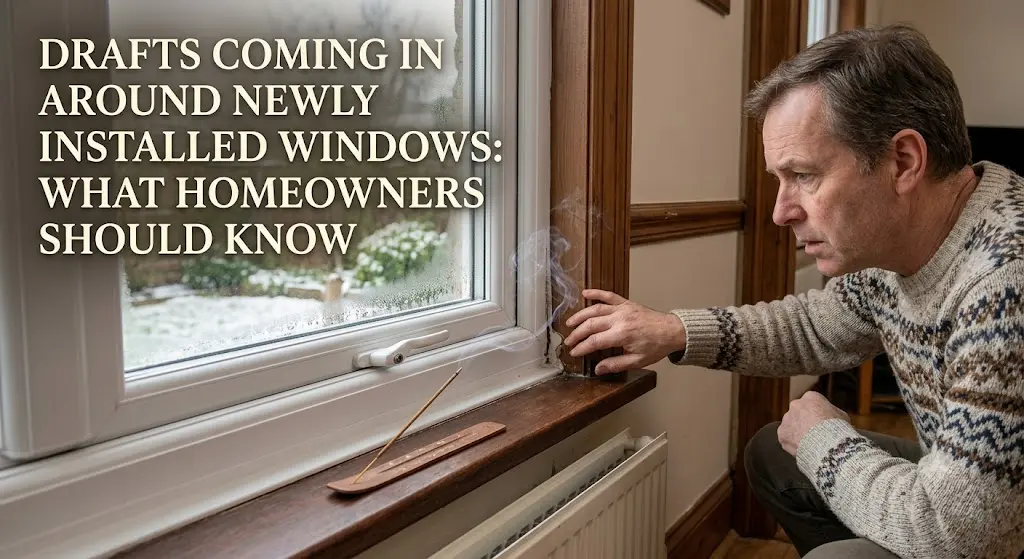
Drafts around newly installed windows usually come from an installation gap rather than a faulty window. In most cases, poor air sealing, an unlevel frame, or damaged weatherstripping is letting cold air slip in around the window.
You invested in new windows for comfort and lower heating bills, so feeling a draft near them is understandably frustrating. Our team has installed and diagnosed windows across Winnipeg for more than a decade, and most drafts trace back to a handful of fixable causes.
Because our winters are long and severe, even a small sealing flaw shows itself quickly. Read on to understand the real cause and how to fix it properly.
Are Drafts Around New Windows Normal?
Some cold feeling near new windows is normal on a bitter Prairie night, but a steady draft you can feel with your hand is not. That kind of moving air usually points to a fit or sealing problem, not the normal chill of cold glass.
A new window should seal more tightly than the one it replaced. When a noticeable draft appears after a fresh installation, it usually means a step was missed during fitting. Our careful professional window installation services prevent that problem from the start.
These complaints show up most on cold, windy days, when the pressure gap between indoor and outdoor air is largest. Your furnace pushes warm air up and out, and cold air is pulled in low through any weak seal.
That constant loss also shows up on your Manitoba Hydro bill, since the furnace runs longer to keep up. At -35°C, that pressure gap grows sharply. Even then, the window itself is rarely the real cause.
How to Confirm It’s Really a Draft
Not every cold feeling near a window here is a leak. A real draft comes from the frame edges, while cold at the centre is usually cold glass, best solved with high-performance triple-pane windows.
The Hand Test
One of the simplest ways to check for a window air leak is with your hand. Slowly move a slightly damp hand around the window frame, sash, and corners.
Damp skin is more sensitive to moving air than dry skin, making it easier to detect even a small draft. If you feel a cool stream of air around the joints or edges, there’s likely a gap allowing outside air to enter.
For the most accurate results, perform this test on a cold or windy day when the temperature difference between indoors and outdoors makes drafts easier to notice.
The Tissue or Smoke Test
A thin piece of tissue paper or a smoke source, such as an incense stick or smoke pencil, can reveal air leaks that are too subtle to feel by hand. Hold it close to the window frame, sash, and corners, and watch for movement.
If the tissue flutters or the smoke stream bends in one direction, air is passing through a gap in the window or its seal.
When using incense, always keep it well away from curtains, blinds, and other flammable materials, and never leave it unattended.
Checking During Windy Weather
Windy weather makes window air leaks much easier to detect. On cold, gusty days, outside air is forced through even the smallest gaps around the window frame, sash, or weatherstripping, making drafts more noticeable.
In Winnipeg, strong winter winds and temperatures that can fall below -30°C often expose leaks that are difficult to detect on calm days.
If you’re checking your windows yourself, choose a cold, windy day for the most reliable results, as even minor air leaks become much easier to spot.
Read More: Sliding Patio Door vs French Door: Which Seals Better?
8 Common Reasons You Feel Drafts Around Newly Installed Windows
After thousands of installations, the same causes come up again and again. These are the eight that professionals check first.
1. Gaps Between the Window Frame and the Wall
Every window sits in a rough opening slightly larger than the window itself, and that gap must be sealed properly with foam and a backer rod. When the sealing is skipped or applied too thinly, it leaves a direct path for cold air. This is the single most common cause found on service calls.
2. Missing or Inadequate Insulation Around the Frame
Some crews pack fibreglass into the gap and consider it sealed, but Natural Resources Canada confirms that this does not stop air leakage. Low-expansion foam paired with a backer rod seals the opening much better, and your home feels noticeably warmer.
3. Poor Caulking or Failed Sealant
Exterior caulking blocks wind-driven air and water from reaching the opening. Low-grade sealant shrinks and cracks within a single season, and even one missed bead on a windward side can create a steady draft. Quality sealant flexes with the cold and holds for years.
4. Improper Flashing Installation
Flashing directs water safely away from the opening, and when it is installed poorly, both moisture and air can slip in behind the frame. This mainly affects full-frame installations; insert or retrofit replacements rarely disturb the existing flashing.
5. The Window Isn’t Properly Squared or Level
A window set out of square cannot seal evenly, because the sash presses against the frame unevenly. Even a few millimetres out of line can leave a gap you can feel. For that reason, a level, plumb, and square installation is essential.
6. Damaged or Missing Weatherstripping
Weatherstripping seals the moving parts of the sash, and shipping, rough handling, or pressure can flatten it. A single damaged section lets air pass on every cold day, though a matching replacement strip usually restores the seal quickly.
7. Manufacturing Defects
Occasionally, the window itself arrives with a flaw, most often a warped sash or a failed seal. Fog trapped between the panes is the clearest sign, and it points to the manufacturer rather than the installer.
8. Air Is Entering From Another Part of the Wall
Sometimes the new window is blamed unfairly when air is slipping in through a nearby outlet, baseboard, or trim gap. In winter, warm air rises and pulls cold air in near the floor. This stack effect is stronger in older homes, as explained in how Winnipeg’s harsh winters affect your windows.
How to Fix Drafts Around Newly Installed Windows

The right repair depends on what’s causing the draft. Some fixes are straightforward, but others require professional attention. If your windows were installed recently, contact the installer before attempting major repairs, as the issue may be covered under the workmanship warranty.
Method 1: Reseal the Exterior
Exterior caulking protects the gap between the window frame and the siding or brickwork. Over time, it can crack, shrink, or separate from the surface, allowing cold air and moisture to enter.
What to do:
- Inspect the caulking around the outside of the window for cracks, gaps, or missing sections.
- Remove any loose or damaged sealant before applying new exterior-grade, weatherproof caulk.
- Apply a continuous, even bead around the frame and smooth it for a complete seal.
- If the window was installed recently, ask your installer to reseal it rather than doing it yourself, as it may be covered under warranty.
Method 2: Add Proper Insulation Around the Frame
Even if the exterior looks sealed, drafts can occur if the space between the window frame and the rough opening wasn’t insulated correctly during installation.
What to do:
- Remove the interior trim only if you’re comfortable inspecting the installation.
- Check for gaps or missing insulation around the frame.
- Fill gaps with low-expansion spray foam made specifically for windows and doors.
- Never use standard high-expansion foam, as it can warp the frame and affect window operation.
- If you suspect poor installation, have the installer correct the insulation instead of attempting the repair yourself.
Adjust the Window
A window that is slightly out of alignment may not compress evenly against the weatherstripping, leaving small gaps that let outside air in.
What to do:
- Close and lock the window to see whether it seals evenly on all sides.
- Look for uneven gaps, difficulty locking the window, or corners that don’t sit flush.
- Tighten loose hardware if appropriate, but avoid forcing adjustments.
- If the frame is out of square, have a professional realign the window and adjust the hinges, locks, or shims. This is especially important for casement and awning windows, where a tight compression seal is essential.
Method 3: Replace Damaged Weatherstripping
Weatherstripping creates the airtight seal between the sash and the frame. If it’s torn, flattened, or has pulled away from the frame, drafts can develop even when the window is fully closed.
What to do:
- Inspect the weatherstripping for cracks, tears, missing sections, or signs of compression.
- Clean the channel before installing replacement weatherstripping.
- Use the correct replacement designed for your window model to maintain a proper seal.
- Test the window after installation to confirm it closes and locks smoothly without leaving gaps.
Method 4: Correct Installation Errors
If none of the previous repairs stop the draft, the problem may be with the original installation. A window installed out of square, poorly flashed, or improperly sealed around the rough opening often requires more than a simple adjustment.
What to do:
- Document the draft with photos or videos, especially during windy weather or while performing a smoke test.
- Contact the original installer and explain the issue if the window is still under warranty.
- Request a full inspection to check the frame alignment, insulation, flashing, and air sealing.
- If an installation defect is confirmed, the window may need to be removed and reinstalled correctly. Although this is the most extensive repair, it permanently resolves drafts caused by poor installation rather than temporary surface fixes.
Read More: How to Prepare Your Home for Window Replacement
Should You Contact the Installer?
Yes. Homeowners should contact the original installer before attempting any permanent repairs of their own.
A new installation almost always includes a workmanship warranty, so a reputable installer returns and corrects their own work at no charge. The manufacturer warranty, by contrast, covers the window itself, such as a failed seal.
Do-it-yourself caulk or foam can void both and may trap moisture inside the wall. Before scheduling an inspection, it helps to document the problem with clear photos of the draft, any frost, and the visible gaps. Our family-owned team, serving Winnipeg since 1993, stands firmly behind every installation.
How Professionals Diagnose Window Air Leaks
When the source of a window draft isn’t obvious, professionals use special tools to find exactly where outside air is entering. These methods remove the guesswork and help identify the right repair.
Visual Inspection
Every inspection starts with a close visual check. Our technician examines the window frame, sash, weatherstripping, caulking, and surrounding trim for signs of wear or damage.
Years of installation and repair experience make it easier to spot common problem areas. Even a small crack in the sealant or a section of loose weatherstripping can let in a noticeable draft.
Smoke Pencil Test
A smoke pencil produces a thin, visible stream of non-toxic smoke. The technician moves it slowly around the window frame, corners, and the parts that open.
If air is leaking through a gap, the smoke will drift or bend toward the opening. This simple test quickly finds leaks too small to feel by hand.
Thermal Imaging Camera
A thermal imaging camera detects temperature differences across the window and surrounding wall.
Areas where cold outdoor air is entering show up as cooler spots on the display. This lets technicians find missing insulation, hidden gaps behind trim, or poorly sealed window installations without removing finished materials.
Blower Door Testing
In a blower door test, we use a powerful fan mounted in an exterior doorway to temporarily lower the air pressure inside the home. As outside air is drawn through every opening, even small window leaks become much easier to find.
This test is commonly performed during professional home energy audits because it reveals drafts that a single check might miss. It is especially useful for older homes where several air leaks together may be driving up heating costs.
Read More: Single Slider vs Double Slider Windows Compared
Conclusion
Drafts coming in around newly installed windows almost always trace back to a sealing problem that can be fixed. Acting early matters, because a small draft left alone can lead to costly moisture damage and higher heating bills.
Upgrading to ENERGY STAR triple-pane windows rated for Climate Zone 3, the coldest in Canada, qualifies your home for rebates through Efficiency Manitoba. Those savings add up quickly against Winnipeg heating costs.
If you would rather have the source found and sealed properly the first time, our certified team is ready to help. Book a free consultation with SmartTech today, or call (204) 318-6162.
Frequently Asked Questions
Why do my new windows feel cold if there is no draft? This is usually a convective draft caused by cold glass. The glass chills the air beside it, and that cooler air sinks toward the floor. Triple-pane glass with a warm-edge spacer keeps the inner surface warmer and reduces the cold feeling.
Is window condensation the same problem as a draft? No. Condensation is a humidity issue, not an air leak. Tighter new windows can raise indoor humidity, as Natural Resources Canada explains, so the moisture you see is not always a leak. Our guide to stopping window ice buildup walks through the fix.
Should I caulk around my new windows myself? On a new installation, this is best avoided. Do-it-yourself caulk can void your workmanship warranty and may trap moisture, so any sealing is better handled by the installer.
Do triple-pane windows stop drafts better than double-pane? Triple-pane glass keeps the inner surface noticeably warmer, which cuts both the cold-glass draft and overall heat loss. For Manitoba winters, it is the stronger, more comfortable choice.
How soon can a draft appear after window installation? A poor seal can feel drafty on the very first cold, windy day. In other cases, the problem develops slowly as low-grade sealant shrinks over the first season.