What Are Low E Windows? Pros, Cost & Lifespan Explained
Low E windows are glass units coated with a microscopically thin metallic layer that reflects radiant heat while allowing natural light to pass through. In cold climates, that coating reduces indoor heat loss significantly. However, performance depends on pane count, gas fill, and installation quality.
Many homeowners assume all modern windows perform the same, but that is not the case. In long heating seasons, glass efficiency directly affects comfort and utility costs. In this guide, we break down real performance factors so you can make an informed decision before upgrading.
What are Low-E Windows?
Low-E windows use glass coated with a microscopically thin metallic oxide layer. This coating reduces emissivity, which limits radiant heat transfer. In cold climates, radiant heat loss drives energy waste. Therefore, the coating reflects indoor heat back into your home.
At the same time, it blocks solar infrared heat in summer. The coating sits inside a sealed insulated glass unit. Because of that, it will not peel or scratch. Most low emissivity windows also include argon gas and warm-edge spacers. These components reduce conduction and edge heat loss. In Winnipeg homes, glass performance directly affects comfort and heating costs.
How Do Low E Coatings Work on Glass?
Low E coatings control radiant heat transfer through selective reflection. That control matters in windows for Winnipeg winters, where heat loss happens quickly.
Below is how the system works inside modern insulated glass units.
1. Reflects Indoor Radiant Heat
Your heating system warms interior surfaces, not just air. Those surfaces release long-wave infrared energy toward the glass. The coating reflects that energy back inside. As a result, less furnace heat escapes outdoors.
2. Slows Nighttime Energy Loss
During -30°C cold snaps, radiant heat loss increases sharply. Untreated glass releases energy quickly at night. Low E coatings reduce that outward movement. Therefore, indoor temperatures remain more stable.
3. Separates Light from Heat
Sunlight contains visible light and infrared heat. The coating allows natural light inside your home. However, it limits excessive solar infrared transfer. This balance protects comfort without darkening rooms.
4. Works Inside a Sealed Glass Unit
Manufacturers apply the coating inside the insulated glass unit. It sits between panes, not on exposed surfaces. Because of that, it will not peel or scratch.
5. Enhances Performance with Argon Gas
Most modern units include argon gas between panes. Argon slows conductive heat transfer through the cavity. Together, gas fill and coating improve total thermal resistance.
In several Winnipeg window replacement projects, we found that older double-pane units without gas fill showed significantly higher edge heat loss. Once upgraded, indoor comfort improved during sustained sub-zero weather.
Read More: How Winnipeg’s Harsh Winters Affect Your Windows
Special Characteristics That Make Windows Energy Efficient?
Energy-efficient windows control three types of heat transfer. They reduce radiation, conduction, and air leakage. In Winnipeg homes, these losses increase quickly during winter. If your rooms feel colder near glass, performance likely plays a role. Below are the characteristics that truly determine efficiency.
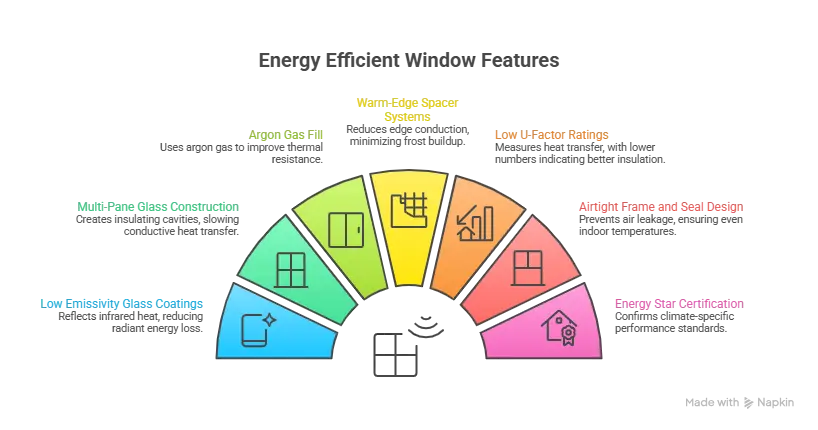
1. Low Emissivity Glass Coatings
First, Low E coatings reflect long-wave infrared heat. This heat comes from warm interior surfaces. Without this layer, radiant energy escapes directly through glass. As temperatures drop, that loss becomes noticeable indoors.
2. Multi-Pane Glass Construction
Next, double or triple panes create sealed insulating cavities. These spaces interrupt conductive heat movement. Therefore, heat transfers more slowly between indoors and outdoors. In older single-pane homes, this difference feels immediate.
3. Argon Gas Fill
In addition, manufacturers fill cavities with argon gas. Argon conducts less heat than normal air. As a result, overall thermal resistance improves. During several Winnipeg replacement projects, we measured stronger edge performance after upgrading gas-filled units.
4. Warm-Edge Spacer Systems
Equally important, spacers separate glass along the perimeter. Traditional aluminum spacers transfer cold quickly. Warm-edge spacers reduce that edge conduction. This helps lower frost buildup during severe colds.
5. Low U-Factor Ratings
U-factor measures total heat transfer through the window. Lower numbers indicate better insulation performance. For prairie winters, this rating matters more than appearance or style.
6. Airtight Frame and Seal Design
However, even high-performance glass fails with poor sealing. Air leakage creates drafts and uneven indoor temperatures. In many service evaluations, air gaps caused more discomfort than glass type.
7. Energy Star Certification
Finally, Energy Star certification confirms climate-specific performance standards. Many energy-efficient windows Winnipeg homeowners install meet these requirements. That certification ensures tested performance under Canadian conditions.
Why Low-E Windows Are Important in Winnipeg’s Climate
Winnipeg experiences long, severe winters with temperatures often below -25°C. Strong winds and extreme temperature swings increase heat loss through glass. Therefore, window performance directly affects comfort and heating costs.
Winnipeg records some of Canada’s coldest urban temperatures. January averages sit well below freezing, while wind chill pushes exposure lower. As a result, untreated glass loses radiant heat rapidly.
In many local replacement projects, we found older units allowed noticeable perimeter frost and indoor discomfort. Because heating accounts for a large share of household energy use in Manitoba, upgrading to energy-efficient low-e windows Winnipeg homeowners install can significantly reduce winter heat transfer and improve interior stability.
Advantages of Installing Low E Windows
Low E windows reduce radiant heat loss and improve thermal control. In Winnipeg’s extended winter season, that performance becomes critical. If your rooms feel colder near glass, window efficiency likely plays a role.
1. Stronger Winter Heat Retention
Low E coatings reflect indoor infrared heat back inside. Therefore, less warmth escapes during sub-zero temperatures. For homeowners searching for the best windows for cold climate, this feature directly improves interior stability.
2. Lower Heating Demand Over Long Winters
Winnipeg heating seasons last several months. Because heat transfer decreases, furnaces cycle less frequently. As a result, overall energy usage may decline. Many homeowners upgrading to low e glass windows report steadier indoor comfort.
3. Improved Comfort Near Window Areas
Cold glass surfaces create radiant chill and uneven temperatures. Low E technology increases interior glass surface warmth. Therefore, sitting near large windows feels noticeably more comfortable during extreme cold.
4. Reduced Frost and Edge Condensation
Extreme exterior cold lowers glass temperature quickly. Warm-edge spacers combined with Low E improve perimeter performance. During several local replacement projects, we observed reduced edge frost after installing triple pane windows that Winnipeg homeowners selected for winter performance.
5. Better UV and Interior Material Protection
Low E coatings filter significant ultraviolet radiation. This reduces fading of flooring and furniture. You still receive natural daylight without excessive UV exposure.
6. Stronger Long-Term Home Efficiency Value
Energy performance influences modern buyer expectations. For those seeking the best windows for Manitoba climate, Low E systems align with regional efficiency standards and long-term heating stability.
Next: How to Stop Water From Damaging Basement Windows
Limitations You Should know About Low E Windows
Low E windows improve insulation significantly. However, they do not solve every cold-climate issue. In Winnipeg, extreme temperatures expose performance limits quickly.
They Do Not Eliminate All Condensation
Low E coatings improve interior glass temperatures. However, condensation depends heavily on indoor humidity levels. In many winter consultations, we found humidity control influenced moisture more than glass type.
Glass Performance Is Only One Factor
When comparing low e vs triple pane windows, pane count and gas fill matter greatly. Coatings enhance insulation, but total unit construction determines final results.
Installation Quality Affects Efficiency
Even certified products fail with poor sealing. Air leakage around frames reduces overall performance. During cold-weather assessments, we identified installation gaps causing discomfort.
They May Not Meet All Severe Climate Expectations
Low E improves insulation considerably. However, triple-pane systems provide stronger resistance in prolonged sub-zero conditions. For prairie winters, total system design matters.
Upfront Costs Are Higher
Low E coatings increase manufacturing complexity. Therefore, pricing exceeds untreated glass options. However, many units qualifying under Energy Star Canada offset costs through long-term savings.
Low E Windows vs Other Glass Options: What’s the Difference?
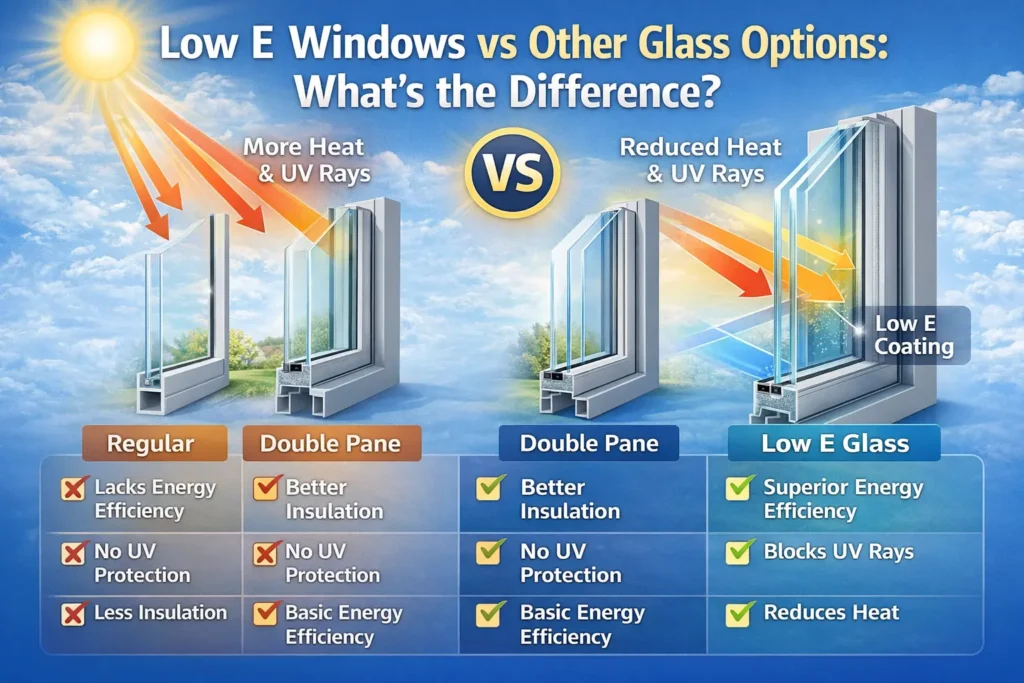
Not every window labeled “energy efficient” performs the same. You will often see several glass options that appear similar at first glance. However, insulation performance, heat control, and condensation resistance vary significantly.
| Feature | Low E Glass | Regular Glass | Double Pane (No Low E) | Triple Pane with Low E | Tinted Glass |
| Radiant Heat Control | Reflects indoor heat | No radiant control | Limited without coating | Strong radiant control | Minimal |
| Conductive Insulation | Moderate (with gas fill) | Very low | Improved over single pane | Highest insulation level | Similar to regular |
| Winter Surface Warmth | Warmer interior surface | Very cold in winter | Cooler than Low E | Warmest interior surface | Similar to regular |
| Frost Resistance | Reduced risk | High frost risk | Moderate risk | Lowest frost risk | High risk |
| Light Transmission | High, nearly clear | High | High | Slightly reduced | Reduced brightness |
| Best For | Cold-climate efficiency | Mild climates only | Budget upgrades | Severe climates | Glare reduction |
Low E vs Double Pane Windows
When comparing low e vs double pane windows, it helps to understand their roles. Double-pane refers to two glass layers. Low E refers to a heat-reflective coating. So, pane count slows conduction, while Low E controls radiation. In Winnipeg’s cold climate, you often need both working together for meaningful insulation improvement.
Low E vs Regular Glass
In a low e vs regular glass comparison, the difference becomes obvious during winter. Regular glass allows radiant heat to escape freely. As a result, interior surfaces feel colder. Low E reflects that heat inward instead. Therefore, rooms stay more stable, especially near large window openings.
Low E vs Triple Pane Windows
The decision between low e vs triple pane windows depends on exposure and climate demand. Triple-pane adds another insulating cavity. Consequently, conductive heat loss decreases further. In Manitoba’s prolonged cold spells, that added resistance becomes noticeable, particularly in north-facing or wind-exposed walls.
Low E vs Tinted Glass
When evaluating low e vs tinted glass, remember they solve different problems. Tinted glass reduces glare and brightness. However, it does little to improve insulation. If winter comfort concerns you, radiant heat control matters more than light reduction.
Are Low-E Windows Worth the Investment?
Yes, in Winnipeg’s climate, Low-E windows are generally worth the investment because they reduce winter heat loss, improve indoor comfort, and lower long-term heating demand. However, total value depends on window type, installation quality, and home exposure.
How Much Does It Cost to Install Low E Windows in Winnipeg?
Installation pricing in Winnipeg depends on window type and project scope. For standard vinyl replacement units with Low-E coating, average pricing typically ranges between C$400 and C$1,200 per window installed. Larger living room units and specialty shapes increase cost. When reviewing window replacement cost Winnipeg homeowners face, labor, disposal, and sealing work also influence final pricing.
Below is a quick local cost snapshot for planning purposes:
| Window Type | Estimated Installed Cost (Winnipeg) |
| Casement / Awning | C$400 – C$900 |
| Sliding Window | C$300 – C$800 |
| Bedroom Standard Size | C$500 – C$1,200 |
| Living Room Large Unit | C$1,100 – C$2,500 |
| Basement Egress | C$2,000 – C$3,800 |
Note:
In several Winnipeg window replacements, we found older units increased heating strain during peak winter months. After upgrading, interior surface temperatures improved noticeably. While upfront costs are higher, long-term heating stability often justifies the investment. Consider a performance-focused evaluation before deciding.
Read More: When Is the Best Time of Year to Install New Windows in Winnipeg?
How Long Do Low E Windows Last?
Low E windows typically last 20 to 30 years when properly manufactured and installed. However, lifespan depends largely on seal integrity, installation quality, and exposure to extreme Winnipeg temperature cycles.
The metallic coating itself does not wear off because it sits inside the sealed glass unit. Instead, most failures occur when insulated glass seals break down. In Winnipeg’s freeze-thaw conditions, expansion and contraction stress perimeter seals. In several cold-weather inspections, we identified seal failure, not coating degradation as the primary lifespan limiter.
Maintenance To Extend The Life Of Low-E Windows
Low E windows require minimal upkeep. However, cold winters and repeated freeze–thaw cycles demand attention. If your heating system runs for months, small maintenance steps protect long-term performance.
1. Manage Indoor Humidity During Winter
When outdoor temperatures drop sharply, interior humidity becomes critical. Warm indoor air meeting cold glass creates condensation stress. Therefore, keep humidity between 30–40% in colder months. In many winter inspections, we found excessive humidity shortened seal lifespan more than exterior exposure.
2. Inspect Exterior Caulking After Freeze–Thaw Cycles
Temperature swings cause expansion and contraction around frames. Over time, this movement weakens exterior sealants. Check for cracks each spring. Early resealing prevents air leakage and moisture intrusion.
3. Keep Drainage Channels Clear Before Snow Melt
Window frames include drainage paths for trapped moisture. When blocked, water collects and freezes. Ice expansion stresses frame components. Clearing debris prevents unnecessary structural strain.
4. Clean Frames and Glass Carefully
Use soft cloths and mild cleaners. Avoid harsh chemicals near perimeter seals. Although the coating sits inside the glass unit, surrounding materials still require protection.
5. Monitor for Early Signs of Seal Failure
Fogging between panes indicates seal breakdown. This does not mean coating failure. Instead, moisture entered the insulated cavity. Early detection prevents further energy performance loss.
6. Schedule Preventive Performance Checks
Before peak winter begins, inspect frames and weatherstripping carefully. During several cold-season evaluations conducted by professionals like SmartTech Windows & Doors, minor air gaps are often identified before noticeable comfort decline. Addressing these early protects long-term efficiency and prevents avoidable heat loss.
In Closing
Low E windows improve insulation, comfort, and long-term heating stability. However, choosing the right system requires proper evaluation and installation. If you are comparing the cost to install low e windows against long-term savings, expert guidance matters.
SmartTech Windows & Doors provides professional assessments, including options for energy star windows Winnipeg homeowners rely on. Contact our team today to schedule your detailed consultation.
Frequently Asked Questions About Low E Windows
Do Low E windows look tinted?
No. Most Low E glass appears clear to the eye. When homeowners ask what low-e windows are, they often assume visible tinting. However, the coating is microscopically thin and does not darken rooms.
Do they reduce natural light?
Low E coatings allow visible light to pass through efficiently. They control infrared heat, not daylight. Therefore, rooms remain bright while insulation performance improves.
Do Low E windows prevent condensation?
Low E technology improves interior glass surface temperature. However, when homeowners ask do low e windows prevent condensation, the answer depends on humidity levels. Proper indoor moisture control remains essential.
How do you stop window condensation in winter?
If you are researching how to stop window condensation in winter, start by reducing indoor humidity. Improve ventilation and ensure proper sealing. In severe climates, upgraded insulated units further reduce surface temperature differences.
Why do new windows sometimes have condensation?
When asking why do new windows have condensation, remember newer homes are more airtight. Reduced air leakage increases indoor humidity levels. Glass performance alone does not eliminate moisture buildup.
Are Low E windows standard in modern replacements?
Today, most modern replacements include Low E coating by default. When comparing triple pane vs double pane Manitoba options, both typically include Low E. Availability may also affect overall energy efficient windows price in Manitoba.